7 Tips for Choosing Glass Fiber Rebar

Glass Fiber Rebar is often selected for its resistance to corrosion, light weight, and electrical nonconductivity. Yet those benefits do not make every product right for every project. A coastal walkway, a wastewater tank, and a precast panel face different loads, exposures, and installation demands. Choosing carefully means looking beyond the product label.

Professor Antonio Nanni, a widely recognized researcher in fiber-reinforced polymer concrete, offers a useful design perspective: FRP reinforcement should be evaluated according to its own material behavior, not treated as a direct steel substitute. A practical takeaway from his work is simple: “Design for the material, not for steel habits.” This is an editorial summary, not a verbatim quotation. The distinction matters. Glass fiber bars have different stiffness, bond, and failure characteristics, so engineers should check project requirements and applicable design guidance before specifying them.

The seven tips ahead focus on details that can be missed on a busy jobsite: bar diameter and tensile properties, resin and surface quality, bend limitations, certification, supplier traceability, handling, and installation support. Ask for test documentation. Check storage conditions. A bundle left in direct sun or dragged across rough concrete may arrive with damage that is hard to spot. The label isn’t enough. Compare verified performance with the actual design, and involve a qualified engineer when requirements are unclear. One uncomfortable truth remains: a low purchase price can look attractive, then prove costly if the product or installation does not suit the structure.
7 Tips for Choosing Glass Fiber Rebar

Define Structural Requirements and Design Loads

Before choosing glass fiber rebar, define what the structure must carry and how it will behave in service. List dead loads, live loads, wind, temperature changes, and any repeated or impact loading. A warehouse slab with forklift traffic has different demands from a residential foundation. Loads matter. Confirm the support conditions, clear spans, concrete strength, and exposure to moisture or chemicals. These details affect bar size, spacing, cover, and development length.

Glass fiber rebar does not behave exactly like steel. Its tensile strength can be high, but its elastic modulus is generally lower, so deflection and crack width may govern before strength does. It also does not yield in the same way as steel. Ask the structural engineer to check serviceability, bond, anchorage, and long-term effects using the applicable design standard and product data. Do not guess. I have seen designs focus on peak load and overlook a long, lightly loaded span; it can still feel too flexible. That’s an easy assumption to miss, and worth reviewing against actual use, not just a calculation sheet.

Compare Glass Fiber Rebar Properties and Grades

Glass fiber rebar grades are not interchangeable labels. Compare the stated tensile strength, elastic modulus, bar diameter, and bond characteristics. GFRP can offer high tensile strength and strong corrosion resistance, but it is less stiff than steel and does not yield in the same way. Design decisions should follow the project specification and applicable test data. Check the details.

Tip 1: Compare test reports, not just grade names. Confirm that reported strength applies to the exact bar size and surface profile. A sand-coated bar and a ribbed bar may bond differently to concrete. Tip 2: Review stiffness alongside strength. A bar can resist high tension yet allow more cracking or deflection if its modulus is lower than the design assumes.

Tip 3: Check the resin system and temperature limits, especially for exposed or fire-sensitive locations. Glass fiber rebar does not rust like steel, but heat can affect its resin. Ask for documented values and installation guidance. Grades and testing methods can vary, so verify that comparisons use the same standard. I would not choose by strength alone; that shortcut is tempting, but incomplete.

7 Tips for Choosing Glass Fiber Rebar – Compare Glass Fiber Rebar Properties and Grades
Tip Property to Compare Useful Reference How to Choose a Grade
1. Start with the design requirements Design loads, exposure conditions, serviceability limits, and applicable codes GFRP design provisions such as ACI 440.11; confirm the governing local code and project specifications. Treat “standard” and “high-performance” as project-selection descriptions, not universal industry grades. Select a bar whose certified properties satisfy the structural design.
2. Compare tensile strength Guaranteed tensile strength and the test method used Indicative product values commonly fall around 500–1,200 MPa; actual values vary by bar diameter, manufacturing process, and specification. A higher-strength option may suit demanding tensile designs, but use the supplier’s guaranteed design value—not a generic range—in calculations.
3. Check elastic modulus and serviceability Longitudinal modulus of elasticity, crack control, and deflection Typical GFRP bar modulus is approximately 40–65 GPa, substantially lower than steel’s approximately 200 GPa. For deflection- or crack-sensitive members, compare modulus as well as tensile strength; a stronger bar does not necessarily have a higher modulus.
4. Match bar size and area Nominal diameter, cross-sectional area, spacing, and bend details GFRP bars are available in multiple sizes, but nominal size and area conventions can differ from steel reinforcement. Check the applicable product specification. Compare certified area and design capacity rather than relying only on a familiar steel bar number. Confirm that required shapes and bends are available.
5. Evaluate bond with concrete Surface profile, coating or surface treatment, and bond test results GFRP bars may use sand-coated, ribbed, or otherwise deformed surfaces. Bond performance depends on the specific bar and concrete conditions. Choose a documented surface configuration suitable for the design, and use the appropriate development and splice lengths from the governing design provisions.
6. Consider durability and temperature exposure Moisture and alkali resistance, sustained-load behavior, glass-transition temperature, and fire requirements GFRP is non-corroding in the way steel is, but long-term performance depends on the fiber-resin system and exposure. Resin temperature limits are product-specific. For hot, fire-rated, or aggressive environments, request relevant durability and temperature test data; do not assume all GFRP formulations perform alike.
7. Verify documentation and total project fit Independent test reports, specification compliance, supply availability, handling, and installed cost ASTM D7957/D7957M is a relevant specification for solid round GFRP bars. Confirm the edition and project acceptance requirements. Select the option with traceable, project-relevant documentation and reliable delivery. Compare total installed cost, not material price alone.
Note: Property ranges are indicative, not grade limits or design values. There is no single universal grading system for all GFRP rebar; verify current product data, test methods, and engineering requirements before specification.

Assess Environmental Exposure and Durability Needs

Salt spray, deicing chemicals, and wet soil create different demands on glass fiber rebar. Match the bar’s specified environmental reduction factor to the actual exposure, not merely the project location. ACI 440.1R-15 gives a factor of 0.7 for GFRP bars in concrete exposed to earth or weather, compared with 0.8 for protected interior concrete. These factors reduce design tensile strength; they are not service-life guarantees.

Look closely at the full exposure cycle. A parking deck may face chlorides, standing water, and freeze-thaw changes, while a basement may stay damp but sheltered from sunlight. FHWA’s 2009 review of FRP durability discusses moisture, alkaline concrete, temperature, and ultraviolet exposure as relevant degradation conditions. Ask suppliers for test data matching your bar type and intended environment. “Corrosion resistant” is not the same as immune to every aging mechanism.

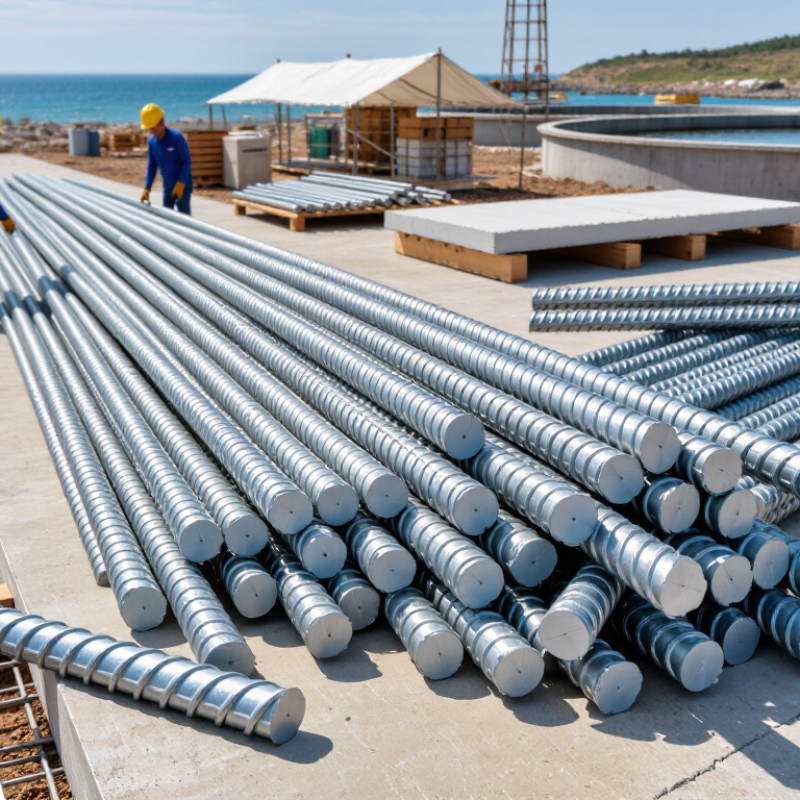
Small details matter. Keep bars covered during outdoor storage, and avoid dragging them across rough ground or bending them on site. Damaged resin can expose fibers, which deserves attention before placement. That assumption deserves a second look. Review concrete cover, drainage, and construction handling alongside the exposure rating; a sound material choice can still underperform when water repeatedly collects around the reinforcement.

Check Compatibility with Concrete and Installation Methods

Check the bar against the concrete mix, exposure, and structural detail—not just its diameter. ACI Committee 440’s ACI 440.1R-15 guide reports typical GFRP bar tensile strengths of 483–1,600 MPa and elastic moduli of 35–51 GPa. That wide range matters. GFRP is much less stiff than steel, so deflection and crack-width checks may govern even when tensile strength appears adequate. Small detail, big effect.

Review the bar’s surface profile and approved bond data, then confirm development lengths, cover, and spacing in the design. ASTM D7957/D7957M provides requirements for solid GFRP bars; check that the selected product’s certified properties match the project specification. Installation matters too. Use stable supports and secure ties that will not damage the bars. Avoid assuming steel practices transfer directly: many GFRP bars cannot be bent on site, and cutting must follow project safety procedures. A rushed placement can shift reinforcement before the pour. That is easy to overlook. When the mix, bar surface, and installation method are not clearly documented, pause and ask the engineer to verify compatibility.

Verify Product Standards, Testing, and Supplier Quality

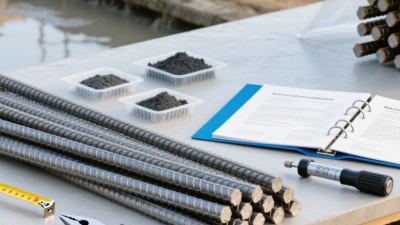
A glass fiber rebar datasheet is a starting point, not proof of suitability. Check which product standard applies to your project, and confirm its edition matches the contract documents. Requirements can vary by application and region. Look for test results covering tensile strength, elastic modulus, bond behavior, dimensions, and durability in alkaline conditions. Paper is not proof. Ask for complete reports, not a cropped table of favorable numbers. Reports should identify the tested product, method, date, and laboratory; verify that the lab’s accreditation covers the relevant tests. I still find it easy to overlook whether the report describes the same bar diameter and production type being quoted.

Supplier quality matters just as much as the reported values. Request lot-level traceability and written quality-control procedures, including checks for bar dimensions, surface condition, and resin consistency. Ask how rejected material is recorded and how production changes are communicated. A sample can help you inspect ribs, finish, and handling, but it cannot replace independent test data. Keep the sample and delivery records together. If practical, review packaging and storage conditions: damaged bundles or prolonged exposure may complicate inspection. A supplier’s confident answer is useful, but it is not enough. Compare documents, delivery labels, and project requirements, and resolve gaps in writing before installation. Some checks take time. That is usually cheaper than guessing later.

7 Tips for Choosing Glass Fiber Rebar: Verify Standards, Testing, and Supplier Quality

How to read this chart: Scores show suggested checklist emphasis on a 1–5 scale. They are editorial guidance, not measured product performance, certification ratings, or test results. Confirm applicable requirements for your project and jurisdiction.