2026 Best Fibre Glass Rebar Suppliers for Global Buyers

Fibre Glass Rebar is moving from a specialist product toward a practical solution for corrosion-sensitive infrastructure. Bridges, marine structures, parking decks, and wastewater plants increasingly need reinforcement that survives moisture, chlorides, and deicing salts. Steel still dominates. Yet corrosion remains a costly weakness.

Market research supports this shift. Grand View Research identifies corrosion resistance and lightweight construction as major drivers of the glass fiber reinforced polymer market. Allied Market Research also reports strong growth expectations for the global FRP composites sector through the 2030s. These forecasts are useful, but they are not purchase guarantees. Regional demand, certification rules, freight costs, and contractor familiarity can change the final decision.

Technical evidence matters more than marketing language. ACI 440.11-22 provides design guidance for GFRP-reinforced concrete buildings. ASTM D7957/D7957M specifies requirements for solid round GFRP bars used in concrete reinforcement. Buyers should also review tensile strength, elastic modulus, surface treatment, glass content, resin type, dimensional tolerance, and batch traceability. A reliable supplier should provide independent test reports and clear production records.

Small details matter.

A bar that arrives warped, poorly marked, or without lot documentation creates delays on site. Our 2026 supplier review therefore considers manufacturing capacity, export experience, technical support, quality control, and transparent documentation. Price remains important, but the lowest quotation may hide installation or compliance risks. No global supplier list is flawless. Product performance can vary between factories, even under similar brand names. Buyers should validate samples, inspect certificates, and request project references before signing a long-term agreement.
2026 Best Fibre Glass Rebar Suppliers for Global Buyers

Fiberglass Rebar: Definition, Structure, and Key Applications

Fiberglass Rebar: Definition, Structure, and Key Applications

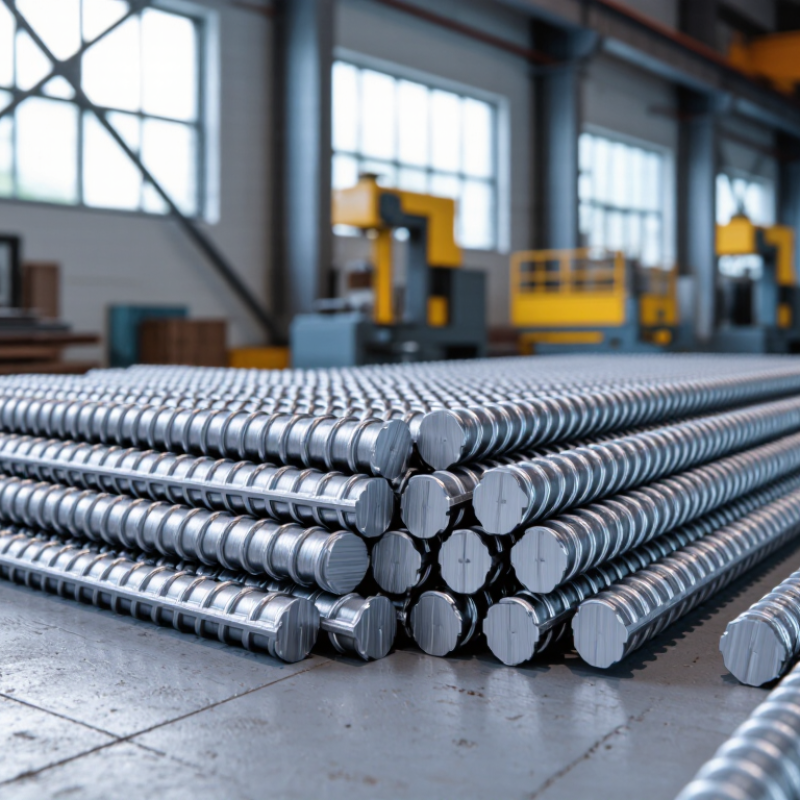
Fiberglass rebar, often called GFRP rebar, is a composite reinforcement made from continuous glass fibers and a polymer resin. The fibers carry tensile loads. The resin binds them and protects them from moisture and alkaline concrete. Many bars include a spiral rib, sand coating, or textured surface for stronger concrete bonding.

It is lighter than steel. Some suppliers report weight reductions of roughly 70% to 80% during handling. However, GFRP does not behave like steel. It has no traditional yield point and usually fails in a more brittle manner.

Designers must check tensile strength, bond, creep, temperature, and fire performance. ASTM D7957/D7957M and ACI 440.11-22 provide useful technical reference points for specification and structural design.

The main applications include bridge decks, parking structures, seawalls, precast panels, tunnel linings, and concrete near saltwater. It also suits MRI rooms because it does not interfere with magnetic fields. A 2024 market report from Grand View Research estimated the global glass fiber reinforced polymer composites market at more than USD 11 billion in 2023, with continued growth expected through the decade. That figure covers more than rebar, so it should not be treated as a direct rebar forecast.

Corrosion resistance is the practical attraction.

Less obvious are installation limits. Bars cannot be bent casually on site, and cutting requires proper dust control. “Maintenance-free” sounds too confident. Better detailing and inspection still matter.
How to Evaluate Fiberglass Rebar Suppliers in 2026

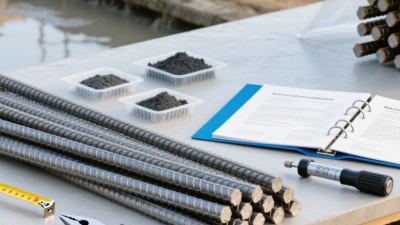
Evaluating fiberglass rebar suppliers in 2026 requires more than comparing prices. Start with documented performance. A serious supplier should provide tensile strength, elastic modulus, bar diameter tolerance, resin type, and alkali-resistance results. Ask whether testing follows ASTM D7205 and ASTM D7957. For structural design, check alignment with ACI 440.11-22 or the applicable national code. Certificates without batch numbers are weak evidence.

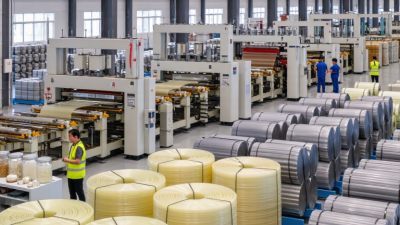
Request samples from different production lots. Measure rib height, surface consistency, and straightness before approving large orders. Factory records should show glass-fiber content, curing controls, and traceability from raw material to shipment. ISO 9001 certification helps, but it does not replace independent laboratory testing. A spreadsheet is not enough. I would still inspect the plant when project volumes are high.

Logistics also reveal supplier reliability. Compare lead times, packaging protection, moisture exposure, cutting services, and replacement procedures. The UNEP 2023 Global Status Report states that buildings and construction consume 34% of global energy and create about 37% of energy and process-related emissions. Durable reinforcement can support longer service life, but suppliers should disclose production impacts and recycled-content limits honestly. Some claims remain difficult to verify. Buyers should request life-cycle data, test dates, and clear warranty conditions before selecting a fiberglass rebar partner.

Leading Fiberglass Rebar Suppliers for International Buyers

Choosing leading fiberglass rebar suppliers for international buyers requires more than comparing prices. Experienced purchasing teams examine tensile strength, fiber content, resin quality, surface ribs, and long-term alkali resistance. These details affect concrete bonding and service life. Ask for current laboratory reports, production lot numbers, and traceable raw-material records. Clear evidence matters.

Reliable suppliers communicate in practical terms. They provide diameter tolerances, standard lengths, custom cutting options, packing details, and export documents. Strong suppliers also explain storage requirements. Fiberglass rebar should remain dry, protected from direct sunlight, and handled without sharp bending. Request samples before placing a large order. A sample often reveals surface consistency and cutting quality.

International projects need steady production, not impressive promises. Check factory capacity, inspection procedures, lead times, and complaint handling. Video audits can help, but they cannot replace independent testing. No supplier is perfect. Some reports may be incomplete, and delivery estimates can change during busy seasons. Buyers should record these risks and confirm responsibilities in writing. Small gaps deserve attention. A dependable supplier welcomes technical questions and adjusts specifications when project conditions change. This approach supports safer purchasing decisions across bridges, marine structures, industrial floors, and other corrosion-sensitive applications.

Supplier Comparison: Quality, Certifications, Capacity, and Pricing

2026 Best Fibre Glass Rebar Suppliers for Global Buyers

Supplier comparison should begin with measurable quality, not catalogue claims. FHWA technical guidance reports that GFRP rebar weighs about one-quarter as much as steel rebar. Typical tensile strength ranges from 600 to 1,200 MPa, depending on fibre and resin systems. Buyers should request ASTM D7957/D7957M test results, diameter tolerances, glass-fibre content, and resin details for every production lot. A certificate alone may hide weak traceability.

Certifications also need careful checking. ISO 9001 supports process control, while ASTM compliance addresses product requirements. ACI 440.11 provides design guidance for GFRP-reinforced concrete in North America. These references are useful, but they are not interchangeable. Ask whether testing was completed by an independent laboratory. Ask for results after alkaline exposure and freeze-thaw conditioning. Small details matter.

Capacity comparison should include monthly output, moulding lines, export packaging, and realistic lead times. Industry market reports published in 2024 continue to identify infrastructure renewal and corrosion-resistant construction as major demand drivers. Yet reported market forecasts vary widely, so buyers should treat growth figures cautiously. Pricing is usually higher per kilogram than steel, although lower weight, easier cutting, and reduced corrosion maintenance can change installed costs. A practical quotation should separate bar price, tooling, testing, freight, insurance, and replacement risk. I would still request a pilot shipment. Production consistency can disappoint, especially across different diameters.

2026 Best Fibre Glass Rebar Suppliers for Global Buyers - Supplier Comparison: Quality, Certifications, Capacity, and Pricing
Supplier Profile Primary Production Region Typical Product Range Nominal Bar Diameters Typical Tensile Strength Typical Elastic Modulus Quality and Certification Evidence Estimated Annual Capacity Indicative Export Price Lead Time Best Fit for Global Buyers Overall Assessment
Profile A — Large Export Manufacturer East Asia Ribbed GFRP rebar, mesh, stirrups, dowels, and cut-to-length bars 6–32 mm Typically 600–1,000 MPa Typically 40–60 GPa ISO 9001 commonly available; product testing should be checked against ASTM D7957 or CSA S807 3,000–10,000 tonnes/year US$1.80–3.20/kg, FOB or comparable export basis 4–8 weeks for standard sizes Infrastructure distributors, bridge decks, seawalls, and large-volume projects ★★★★★
Profile B — North American Code-Focused Producer North America GFRP reinforcing bars, bent bars, stirrups, and project-specific fabrication 10–32 mm Typically 600–900 MPa Typically 45–60 GPa Product documentation may reference ASTM D7957, ACI 440.11 design guidance, and independent laboratory testing 1,000–5,000 tonnes/year US$3.50–7.00/kg, domestic or delivered regional pricing 6–12 weeks, depending on fabrication Projects requiring strong technical support, North American compliance, and engineering documentation ★★★★★
Profile C — European Specification Supplier Europe GFRP bars, mesh, dowels, and corrosion-resistant reinforcement systems 8–32 mm Typically 650–1,000 MPa Typically 45–55 GPa ISO 9001 may be available; buyers should request EN-based test reports, declared performance data, and project approvals where applicable 800–4,000 tonnes/year US$4.00–8.50/kg, ex-works or delivered within Europe 5–10 weeks European civil works, tunnels, transport infrastructure, and projects with detailed traceability requirements ★★★★☆
Profile D — High-Volume Cost Supplier East Asia Standard ribbed GFRP rebar, mesh, dowels, and prefabricated reinforcement cages 6–25 mm Typically 600–850 MPa Typically 40–55 GPa ISO 9001 may be available; confirm lot-level tensile, shear, bond, resin-content, and durability test results before purchase 5,000–15,000 tonnes/year US$1.60–2.80/kg, FOB or comparable export basis 3–7 weeks for standard products Price-sensitive housing, agricultural, marine, and general concrete reinforcement applications ★★★★☆
Profile E — Middle East and Regional Stocking Supplier Middle East Imported or locally finished GFRP bars, mesh, dowels, and cut lengths 8–25 mm Typically 600–900 MPa Typically 40–60 GPa Supplier quality systems vary; request manufacturer certificates, batch traceability, ASTM D7957 or CSA S807 test reports, and storage records 500–2,500 tonnes/year US$2.80–5.50/kg, regional warehouse or delivered pricing 1–5 weeks from local stock; 6–10 weeks for new production Gulf, North African, and nearby infrastructure projects needing shorter regional delivery ★★★☆☆
Profile F — Custom Engineering and Small-Batch Supplier Europe or North America Custom bends, threaded or mechanically connected systems, couplers, and special-length bars 10–32 mm Typically 600–900 MPa Typically 45–60 GPa Usually supported by project-specific calculations, independent testing, and documented manufacturing procedures; certification scope must be verified 300–1,500 tonnes/year US$5.00–10.00/kg, depending on geometry and fabrication 8–16 weeks Rehabilitation, complex geometries, low-volume orders, and technically demanding projects ★★★★☆
Profile G — Latin American Regional Supplier Latin America Standard GFRP rebar, mesh, dowels, and corrosion-resistant reinforcement accessories 6–25 mm Typically 600–850 MPa Typically 40–55 GPa Certification and testing availability varies; request ISO 9001 evidence, third-party test reports, and compliance documentation for the destination country 500–3,000 tonnes/year US$2.80–5.80/kg, regional delivered pricing 4–10 weeks Local infrastructure, coastal construction, water treatment, and projects requiring Spanish or Portuguese support ★★★☆☆

Buyer verification note: Capacity, lead time, and pricing are indicative 2026 market ranges rather than quotations. Actual values vary by diameter, bar length, surface profile, resin system, order volume, Incoterms, freight, and destination. Before ordering, request current mill certificates, batch-level test reports, resin and glass-fibre specifications, dimensional tolerances, bond-performance data, durability results, and confirmation of compliance with the applicable project standard.

Global Buying Guide for Fiberglass Rebar Orders and Delivery

Global buying of fiberglass rebar requires more than comparing prices. The 2023 ASCE Infrastructure Report Card notes that 42% of U.S. bridges are at least 50 years old. This aging network increases demand for corrosion-resistant reinforcement and dependable international supply.

Request documents aligned with ASTM D7957/D7957M and design guidance from ACI 440.11-22. Confirm nominal diameter, tensile strength, surface treatment, resin type, bend radius, and lot traceability. Ask for recent test reports, not only a product brochure. A spreadsheet can still be wrong.

Delivery planning starts before payment. Specify cut lengths, coil or straight-bar packaging, pallet dimensions, gross weight, and moisture protection. Confirm the port, Incoterm, customs paperwork, and insurance responsibilities in writing. For container orders, check loading plans carefully; unused space increases freight cost quickly. Use a pre-shipment inspection for the first order, including diameter checks and label verification. Keep a realistic buffer for factory scheduling, port congestion, and destination clearance. Three weeks may become six.

Global buyers should also compare technical support. Suppliers should explain storage conditions, field cutting, lap design, and handling limits without exaggeration. ACI guidance supports engineered design rather than direct substitution for steel. That point is often missed. Product certificates help, but project approval still depends on the engineer, local codes, and documented performance.