China Top 10 Fibre Glass Rebar Suppliers for Global Buyers
China has become a major manufacturing base for Fibre Glass Rebar used in concrete, bridges, tunnels, seawalls, and industrial floors. Global buyers often see attractive prices, broad production capacity, and flexible private-label services. Yet supplier quality can vary sharply between a polished factory tour and the actual shipment.
This guide examines China’s top Fibre Glass Rebar suppliers through practical purchasing factors. These include glass-fiber content, resin formulation, rib geometry, tensile strength, alkaline resistance, dimensional consistency, and batch traceability. It also considers export experience, testing records, production equipment, packaging, lead times, and technical support. A reliable supplier should provide current laboratory reports, not only attractive catalog figures. Samples should be checked against drawings and project specifications. Small differences matter.
Professor Antonio Nanni, a leading FRP reinforcement authority, has stated, “FRP is not a replacement for steel; it is an alternative reinforcement material.” That distinction is important. Fibre Glass Rebar offers corrosion resistance, low weight, and electromagnetic transparency, but it behaves differently from steel under loading, fire exposure, bending, and anchorage conditions. Buyers must avoid treating it as a simple one-for-one substitution. No supplier is perfect. Some websites lack detailed evidence, while some smaller manufacturers may deliver excellent products quietly. This ranking therefore should support due diligence, not replace it. Purchase decisions should include independent testing, factory communication, certification review, and a clear understanding of the project environment. The strongest supplier is not always the cheapest. Sometimes, the cheapest quote becomes expensive after delays, rejected batches, or redesign work.
What Is Fibre Glass Rebar and Why Does It Matter?
What Is Fibre Glass Rebar and Why Does It Matter?
Fibre glass rebar, often called GFRP rebar, is a composite reinforcement made from glass fibres and a resin matrix. The fibres provide tensile strength, while the resin protects them from moisture and chemical exposure. Unlike steel, it does not rust when concrete is exposed to saltwater, de-icing chemicals, or persistent humidity. It is also non-magnetic and electrically non-conductive, which supports use near sensitive equipment and transport systems.
The material is lightweight, often making site handling easier. A worker can carry long pieces without lifting equipment. Cutting may also require different tools because fibre glass rebar does not behave like steel. Its low weight can reduce transport effort and simplify installation in remote projects. These benefits matter in bridge decks, coastal structures, wastewater facilities, and underground construction. Concrete still carries compression, while the rebar mainly manages tensile forces and cracking.
It is not a universal replacement. Fibre glass rebar has a lower elastic modulus than steel, so engineers must check deflection carefully. Heat resistance, bond performance, bar diameter, and design codes also require verification. In practical purchasing, global buyers should request test reports, production traceability, surface details, and dimensional tolerances. Independent testing adds confidence, especially when project conditions are severe. Some suppliers may describe strength clearly but explain long-term behaviour poorly. That deserves a second question. Proper storage matters too; prolonged sunlight, impact, or careless bending can damage the bars before installation.
What Is Fibre Glass Rebar and Why Does It Matter?
Fibre glass rebar, also known as glass fibre reinforced polymer (GFRP) rebar, is a non-metallic reinforcement made from glass fibres embedded in a polymer resin. It offers high tensile strength, low weight, and strong resistance to corrosion. The chart compares representative tensile-strength values used for preliminary material evaluation; actual performance depends on bar diameter, resin system, manufacturing process, and applicable standards.
Indicative tensile-strength ranges: GFRP rebar approximately 600–1,000 MPa; carbon-steel reinforcing bar commonly approximately 400–600 MPa. GFRP values should be verified against project specifications and standards such as ASTM D7957, while steel reinforcement is commonly specified under standards such as ASTM A615.
Key Criteria for Evaluating Global Fibre Glass Rebar Suppliers
China Top 10 Fibre Glass Rebar Suppliers for Global Buyers
Key Criteria for Evaluating Global Fibre Glass Rebar Suppliers
Global buyers should assess performance before comparing quotations. A 2024 industry analysis by Grand View Research reports continued growth in the FRP rebar market, driven by corrosion-resistant infrastructure. Demand alone does not prove supplier capability.
Request verified test results for tensile strength, elastic modulus, shear strength, and alkali resistance. ACI 440.11-22 provides design guidance for glass-fibre-reinforced polymer bars in concrete structures. Suppliers should also show production controls aligned with relevant ASTM or ISO methods. Check whether test samples match the proposed diameter, resin system, and surface treatment.
Small details matter. Inspect rib geometry and bar straightness. Ask for batch numbers, curing records, and independent laboratory certificates. Product consistency is often more valuable than an impressive single test result. The 2023 Global Infrastructure Hub outlook estimates substantial long-term infrastructure investment needs, increasing the importance of reliable lifecycle performance and delivery planning. However, market reports use different definitions and forecasts. Buyers should question the assumptions.
Evaluate warranty terms, factory capacity, mold availability, packaging, and export experience. Confirm whether the supplier can maintain tolerances during peak orders. A low price may conceal higher installation or redesign costs. Samples can look excellent. Production batches may not. Independent inspection before shipment is sensible, especially for major bridge, marine, and transport projects.
China’s Top 10 Fibre Glass Rebar Suppliers
China’s Top 10 Fibre Glass Rebar Suppliers
China’s top 10 fibre glass rebar suppliers serve construction buyers across roads, bridges, tunnels, and marine projects. Their products usually combine fiberglass strands with a corrosion-resistant resin matrix. Unlike steel, fibre glass rebar does not rust in chloride-rich environments. That matters near coastlines and deicing salt zones.
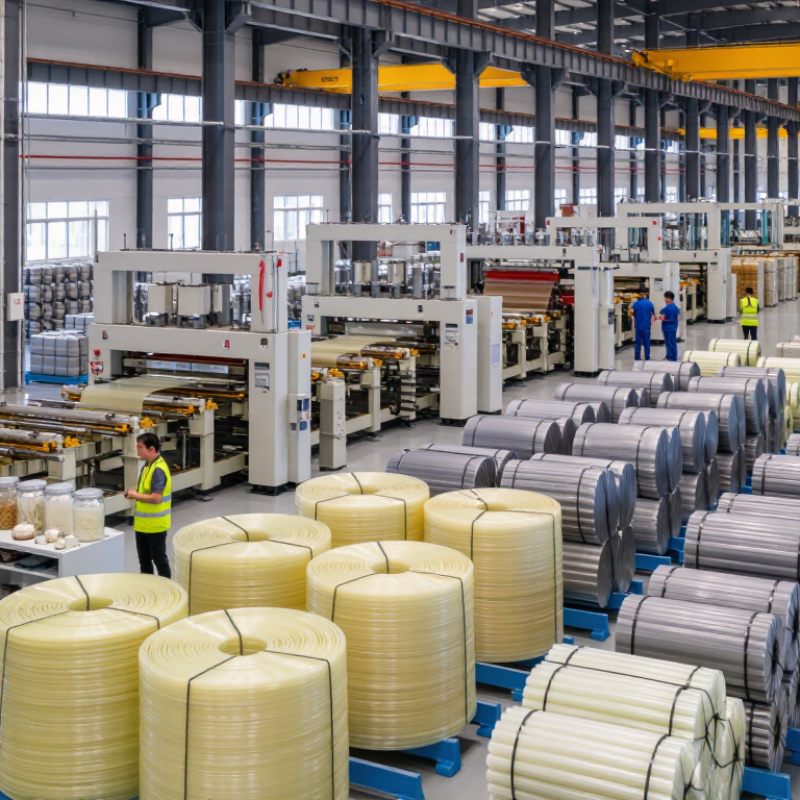
Experienced suppliers typically operate pultrusion lines with controlled tension and heat. Buyers should examine bar diameter, surface profile, resin type, tensile strength, and elastic modulus. A ribbed or sand-coated surface can improve concrete bonding. Reliable factories also provide batch testing, dimensional checks, packing records, and traceable production dates. Ask for independent laboratory reports, not only a product brochure. Small samples can reveal surface consistency and cutting behavior.
Export experience also deserves close attention. Strong suppliers use moisture-resistant wrapping, clear labels, and reinforced pallets. They understand container loading and project-based delivery schedules. However, a top-ten list is never perfect. Factory capacity may change, and published test values may not reflect every batch. Buyers should compare recent samples, inspection procedures, certifications, and after-sales communication. Visiting a production site remains useful when project risk is high. It exposes details that photographs hide, such as resin uniformity, storage conditions, and worker handling. Price alone can mislead. A lower quotation may involve thinner coatings, weaker documentation, or less dependable delivery.
China Top 10 Fibre Glass Rebar Suppliers for Global Buyers - China’s Top 10 Fibre Glass Rebar Suppliers
An anonymized comparison of commonly available Chinese GFRP rebar supply profiles and published technical ranges for international procurement screening.