Choosing a reliable supplier requires more than comparing prices, product photos, or claimed tensile strength. The Top 10 GFRP Rebar Glass Fiber Material Suppliers should be assessed through manufacturing experience, resin quality, fiber alignment, testing records, and project support. A polished website proves little. Factory evidence matters more.
GFRP rebar combines glass fibers with a polymer resin matrix. Its performance depends on fiber volume, surface profile, curing control, diameter consistency, and resistance to alkaline concrete environments. Buyers should request technical datasheets, batch test reports, installation guidance, and references from bridges, marine structures, tunnels, or parking decks. Small details matter. A rough rib pattern can affect concrete bonding. Poor storage can also damage the bar before installation.
Professor Antonio Nanni, a leading authority on fiber-reinforced concrete, has stated, “FRP reinforcement is not a replacement for steel reinforcement; it is a different material with different properties.” This distinction should guide every supplier comparison. Gfrp Rebar Glass Fiber Material offers corrosion resistance and light handling, but it also has lower elastic modulus and different failure behavior than steel. Design teams must understand those limitations.
This ranking aims to identify suppliers with credible production systems, transparent documentation, consistent dimensions, and practical engineering knowledge. Some companies may appear strong on paper yet provide limited field evidence. That weakness deserves attention. A fair review should acknowledge uncertainty, not hide it. Supplier capabilities can change, and regional standards differ. Therefore, readers should verify current certifications, sample quality, lead times, and technical support before selecting a manufacturer.
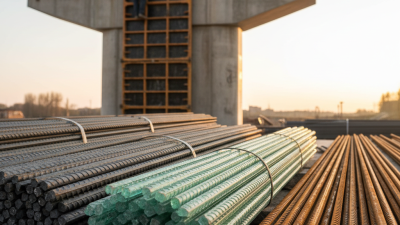
GFRP rebar is a reinforcing bar made from continuous glass fibers held inside a polymer resin. It is not steel with a plastic coat. The fibers carry tensile loads, while the resin protects them and transfers stress through the concrete. This structure gives GFRP rebar a light weight and strong resistance to chloride, moisture, and many chemicals.
Glass fiber quality matters because fiber alignment directly affects tensile performance. Resin chemistry also influences durability, bonding, and resistance to heat. On a bridge deck near a salted roadway, these details can determine whether reinforcement remains stable after years of wet exposure. A ribbed or sand-coated surface may improve concrete adhesion, but surface design should match the project requirements. Engineers should review tensile data, elastic modulus, fiber content, and documented testing before selecting a supplier.
GFRP rebar is easier to carry and cut than steel. Still, it is not automatically better for every structure. Its lower stiffness can produce wider cracks, and its brittle failure behavior requires careful design. One weakness remains. Field cutting can create irritating dust, so practical safety controls matter. Reliable suppliers should provide batch traceability, installation guidance, storage instructions, and clear test reports. I would also question unusually high strength claims without independent evidence. A convincing product is supported by repeatable data, not attractive specifications alone.
A reliable GFRP rebar supplier should provide test data, not only attractive tensile-strength claims. ACI 440.1R-15 reports typical GFRP bar tensile strengths above 600 MPa, while elastic modulus commonly remains near 40–60 GPa. Ask whether these values come from finished bars or glass-fiber samples. The difference matters. Request batch numbers, fiber content, resin type, curing records, and test dates. A 12 mm bar should also match its declared diameter after surface treatment, not just before production.
Check compliance with ASTM D7957 and the tensile-testing method in ASTM D7205. Suppliers should explain their quality-control frequency and provide independent laboratory reports. The Federal Highway Administration has highlighted GFRP’s corrosion resistance and lower density, approximately one-quarter that of steel. However, lower stiffness can increase crack width or deflection in some designs. It is not a simple steel replacement.
Inspect the supplier’s production experience through project references, factory audits, and sample testing. Ask how bars behave after alkaline exposure, freeze-thaw cycles, and bending operations. A supplier unable to show retention data deserves caution. Delivery consistency also matters. Confirm packaging, storage temperature, coil limits, and traceability. Even strong laboratory results can fail in careless field handling. This point is easy to underestimate. Load calculations should follow ACI 440.11-22 or the applicable local design standard, with an engineer reviewing the final reinforcement schedule.
The top 10 GFRP rebar and glass fiber material suppliers should be judged by more than production volume. Reliable suppliers provide consistent fiber content, controlled resin chemistry, and traceable batch records. Their rebar should show stable diameter, rib geometry, tensile strength, and bond performance. Ask for independent test reports. Marketing claims are not enough.
A practical supplier shortlist may include four dedicated GFRP rebar manufacturers, two continuous glass fiber producers, two pultrusion technology specialists, one resin system developer, and one infrastructure materials distributor. Rebar manufacturers should support bridges, seawalls, parking structures, and concrete panels. Fiber producers must control filament strength and surface treatment. Pultrusion specialists should offer steady line speed and accurate curing. Resin developers need resistance to moisture, chemicals, and temperature changes. Distributors should maintain dry storage and dependable delivery.
Field experience often reveals details missing from brochures. Check coil handling, cutting behavior, connector compatibility, and installation guidance. Request samples from different production batches. Compare test conditions, not only reported numbers. Some suppliers provide excellent fibers but limited engineering support. Others offer helpful documentation but inconsistent delivery. This is where rankings become imperfect. A supplier suitable for a coastal project may not fit a high-temperature application. Reviewers should also examine quality systems, worker training, warranty terms, and after-sales response before selecting the final ten.
Top 10 GFRP Rebar Glass Fiber Material Suppliers?
Comparing suppliers requires more than price lists. MarketsandMarkets’ 2024 report projects the GFRP rebar market to grow at roughly 11% annually through 2028. That growth increases capacity claims, but not every factory offers the same quality controls. Buyers should compare bar diameters, resin systems, surface treatment, coil length, and batch traceability. A practical audit asks for monthly output, curing records, tensile results, and independent test certificates.
Standards matter. ASTM D7957 covers glass fiber-reinforced polymer rebar requirements in concrete, while ACI 440.11-22 provides design guidance for concrete structures using GFRP reinforcement. Canadian projects may also reference CSA S807. Supplier products should show tested tensile strength, elastic modulus, bond performance, and durability after alkaline exposure. Numbers must match the relevant standard.
Applications reveal product suitability. Ribbed bars can support bridge decks, seawalls, parking structures, and utility slabs where corrosion risk is high. A supplier with large diameter capacity may suit marine foundations, while smaller bars fit residential panels and precast components. Ask about lead times. A 30-day quotation is useless if production takes twelve weeks. Capacity data can also be vague, especially when factories report theoretical output instead of verified shipments. That deserves scrutiny. One overlooked issue is field handling; lighter bars reduce lifting effort, but excessive bending or poor cutting can damage the composite surface. Supplier guidance should address both.
Top 10 GFRP Rebar Glass Fiber Material Suppliers?
Choosing the right GFRP rebar supplier requires more than comparing prices. Start with project exposure, load requirements, bar diameter, and installation conditions. A coastal bridge needs different evidence than an indoor warehouse. Ask for verified tensile strength, elastic modulus, bond performance, and alkaline resistance data. Do not guess.
A dependable supplier should provide batch records, product tolerances, test dates, and clear technical specifications. Check whether testing follows recognized standards and whether independent laboratories confirm the results. Factory experience also matters. Ask how glass fibers, resin, and surface treatment are controlled during production. Small changes can affect bending behavior and concrete bonding.
Request project references with similar climate, span, and construction methods. Speak with engineers who have used the material, not only sales staff. Review packaging, storage guidance, cutting instructions, and delivery capacity. Technical support should continue after purchase, especially when crews face unfamiliar handling issues. A supplier may offer impressive certificates yet provide weak field support. That is easy to overlook.
Inspect sample bars personally when possible. Look for consistent ribs, clean surfaces, and visible manufacturing defects. Compare several batches, not one attractive sample. Keep written questions and require precise answers. If specifications remain vague, pause the decision. A lower quotation can hide redesign costs, delayed deliveries, or installation mistakes. Even experienced teams sometimes prioritize price too early; that choice deserves a careful second look.
| Position | Anonymous Supplier Profile | Primary Supply Region | Typical Product Range | Common Fiber and Resin System | Relevant Standards or Test Basis | Typical Tensile Strength Benchmark | Typical Delivery Capability | Best-Fit Project Type | Key Selection Check | Overall Fit Score |
|---|---|---|---|---|---|---|---|---|---|---|
| 1 | Large-scale structural GFRP producer | North America | 10–32 mm bars Straight bars Coils | Continuous E-glass fibers with vinyl ester or epoxy resin; ribbed or sand-coated surface options. | ASTM D7957, ASTM D7205, CSA S807, or project-specific test requirements. | Common design benchmarks are approximately 600–1,000 MPa, depending on bar diameter and product construction. | Standard sizes from stock; engineered sizes commonly require production scheduling. | Bridge decks, marine structures, parking garages, and large infrastructure works. | Confirm long-term durability data, bend performance, lot traceability, and approved design values. | High |
| 2 | High-volume pultrusion manufacturer | East Asia | 6–32 mm bars Custom lengths Stirrups | E-glass reinforcement embedded in thermoset resin, normally vinyl ester or epoxy. | ASTM D7957, ASTM D7205, ISO-based quality procedures, and purchaser-approved testing. | Typical published market values fall within approximately 600–900 MPa for many standard diameters. | Competitive export production; container planning is important for long or oversized shipments. | Commercial buildings, retaining walls, tunnels, and general reinforced-concrete applications. | Review resin content, fiber volume, dimensional tolerances, packaging, and independent test reports. | High |
| 3 | Infrastructure-focused composite reinforcement supplier | Europe | 8–32 mm bars Prefabricated cages Custom cut lengths | Alkali-resistant glass fibers with corrosion-resistant thermoset resin and mechanically bonded surface geometry. | EN 13706 principles for pultruded profiles, ASTM methods, and national approval requirements where applicable. | Design values are project-dependent; tensile strength is commonly specified above 600 MPa for structural grades. | Strong technical support; project documentation and certification review may extend procurement time. | Rail infrastructure, road structures, water treatment facilities, and high-durability concrete works. | Check compatibility with local building codes, thermal expansion assumptions, and service-life calculations. | High |
| 4 | Corrosion-resistant marine applications supplier | North America | 10–25 mm bars Sand-coated bars Dowell bars | E-glass fibers with vinyl ester resin selected for moisture, chloride, and chemical exposure. | ASTM D7957, ASTM D7205, ASTM A615 comparison testing where requested, and marine project specifications. | Typical tensile strength benchmarks are approximately 650–900 MPa, subject to diameter and test method. | Short to medium production runs; custom marine accessories may require separate tooling. | Seawalls, coastal bridges, docks, ports, seawater tanks, and desalination facilities. | Request chloride exposure results, moisture conditioning data, bond tests, and ultraviolet protection details. | High |
| 5 | Custom-diameter and prefabrication specialist | East Asia | 6–40 mm bars Bends and links Mesh systems | Continuous glass fibers in vinyl ester or epoxy resin; factory-made cages and reinforcement assemblies available. | ASTM D7957, ASTM D7205, project drawings, and purchaser-defined dimensional inspections. | Approximately 600–850 MPa is a common market range; final values must be verified for the selected diameter. | Flexible custom production; drawings, bend radii, and minimum order quantities should be confirmed early. | Precast elements, modular construction, tunnel linings, and complex reinforcement layouts. | Verify bend strength, connection details, dimensional accuracy, and factory quality-control records. | Medium-High |
| 6 | Precast concrete reinforcement supplier | Europe | 6–25 mm bars Cut-to-length bars Lattice reinforcement | Alkali-resistant E-glass with thermoset resin and enhanced surface treatment for concrete bond. | European technical assessments where available, ASTM testing, and precast producer acceptance procedures. | Common tensile strength specifications range from roughly 600–900 MPa. | Reliable repeat supply for scheduled precast production; delivery is usually tied to production batches. | Precast panels, façade units, utility products, agricultural buildings, and thin concrete sections. | Compare bond behavior, concrete cover reduction assumptions, cutting methods, and handling requirements. | Medium-High |
| 7 | Cost-focused export GFRP bar manufacturer | South Asia | 8–32 mm bars Standard lengths Coils for small sizes | E-glass fibers and vinyl ester resin with ribbed or helically wrapped surfaces. | ASTM D7957, ASTM D7205, ISO 9001 quality systems, and buyer-specified inspection plans. | Market-typical values are approximately 600–850 MPa, but batch testing is essential. | Competitive pricing for container quantities; transit time, customs, and port handling affect total cost. | Low-to-medium-rise construction, slabs, foundations, agricultural works, and nonmagnetic structures. | Evaluate total landed cost, consistency between batches, packaging protection, and warranty terms. | Medium-High |
| 8 | Chemical and wastewater project supplier | Middle East | 10–32 mm bars Corrosion-resistant cages Custom assemblies | Glass fiber reinforcement with vinyl ester or epoxy resin formulated for aggressive chemical environments. | ASTM D7957, ASTM D7205, chemical exposure testing, and project-specific durability requirements. | Common structural grades provide approximately 600–900 MPa tensile strength, subject to product verification. | Regional project logistics can be efficient; imported raw materials may influence production schedules. | Wastewater tanks, industrial floors, chemical containment, cooling towers, and desalination projects. | Ask for alkali resistance, chemical immersion results, resin formulation, and service-temperature limits. | Medium-High |
| 9 | Regional distributor with multi-source procurement | Oceania and Asia-Pacific | 6–32 mm bars Fast-moving sizes Accessories | Products sourced from qualified pultrusion facilities using E-glass and thermoset resin systems. | Supplier certificates, ASTM test methods, local engineering approval, and project-specific compliance documentation. | Product-dependent; many stocked structural bars are marketed in the approximate range of 600–900 MPa. | Fast access to stocked sizes; custom profiles and large volumes may require manufacturer confirmation. | Repair works, residential construction, small bridges, utility projects, and maintenance programs. | Confirm the actual manufacturing source, certificate validity, batch identity, and replacement policy. | Medium |
| 10 | Specialty nonmagnetic reinforcement supplier | North America and Europe | 6–25 mm bars MRI-compatible sizes Electrical-isolation applications | Nonconductive E-glass fibers in corrosion-resistant resin with controlled dielectric properties. | ASTM D7957, ASTM D7205, electrical-resistivity testing, and facility-specific engineering requirements. | Typical structural products are commonly specified at approximately 600–900 MPa. | Specialty inventory may be limited; advance reservation is recommended for unusual diameters or lengths. | MRI facilities, substations, rail systems, laboratories, and electrically isolated structures. | Verify electromagnetic compatibility, electrical resistance, fire requirements, and installation procedures. | Medium |
Note: The strength values and product ranges shown above are industry benchmarks rather than claims about any individual manufacturer. Confirm current certificates, test reports, design values, availability, minimum order quantities, and compliance with the applicable project code before purchase.