How to Use Aramid Rebar in Construction Projects Effectively?
In the ever-evolving world of construction, Aramid Rebar emerges as a game-changer. This innovative material, known for its strength and lightweight properties, is reshaping conventional practices. Using Aramid Rebar effectively in construction projects can lead to significant benefits, such as reduced weight and enhanced durability.
However, it is crucial to understand how to incorporate Aramid Rebar correctly. Many contractors are hesitant to adopt new materials, fearing they lack sufficient knowledge. There are also concerns about cost and performance. These doubts can hinder the progress of construction projects. Yet, when utilized properly, Aramid Rebar can outperform traditional steel rebar in certain applications.
Engineers and builders must prioritize training and experience when implementing Aramid Rebar. Proper installation techniques are essential to maximize its advantages. Despite its benefits, some might still question its reliability over time. Exploring case studies and expert insights can provide a clearer understanding of its long-term performance. Knowledge is key to overcoming these hesitations and ensuring successful project outcomes.
Understanding Aramid Rebar and Its Properties
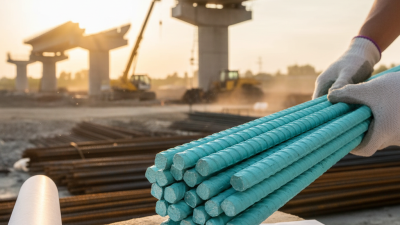
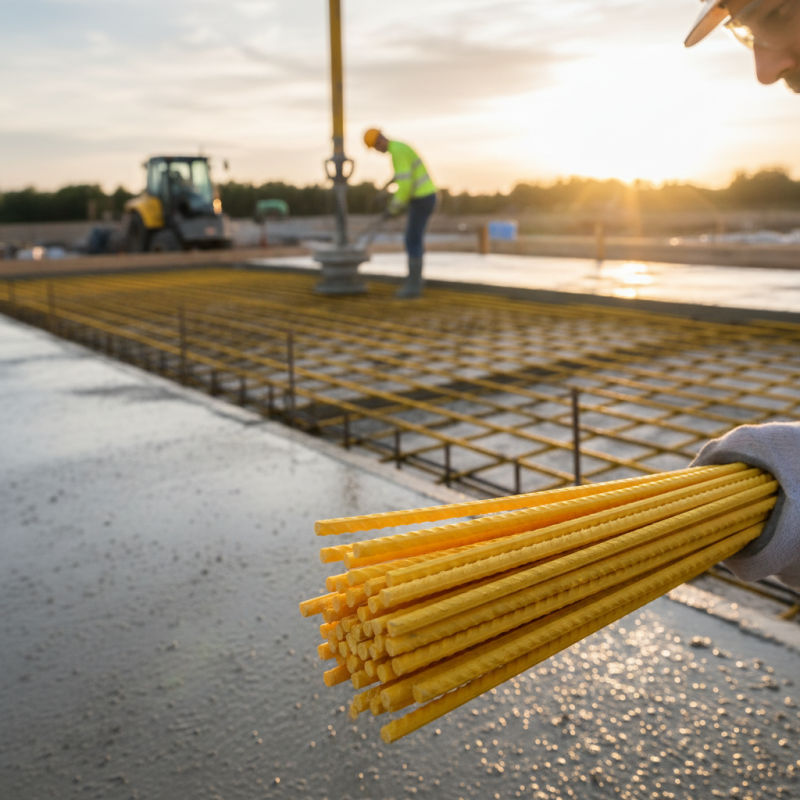
Aramid rebar is a modern reinforcement material gaining traction in construction. It boasts unique properties, such as high tensile strength and lightweight characteristics. According to a report by the International Journal of Advanced Structural Engineering, aramid fibers can provide a strength-to-weight ratio that is significantly higher than traditional steel reinforcement. This property enhances durability while reducing the overall weight of structures, contributing to seismic performance.
When using aramid rebar, understanding its properties is crucial. It is resistant to chemicals and corrosion, making it ideal for harsh environments. Construction professionals should evaluate the specific project conditions to maximize these benefits effectively. However, the cost of aramid rebar can be higher than traditional materials, prompting a careful cost-benefit analysis.
Tip: Always consider the environmental conditions of your project site. Aramid’s corrosion resistance shines in coastal or acidic environments.
Moreover, aramid rebar is non-conductive, which reduces the risk of electromagnetic interference. However, its lower modulus of elasticity compared to steel means that it behaves differently under load. This should be factored into design calculations. Taking a conservative approach to these differences will lead to better outcomes.
Tip: Collaborate with experienced engineers to ensure proper design integration of aramid rebar in your projects. Their expertise can help navigate potential challenges.
Advantages of Using Aramid Rebar in Construction
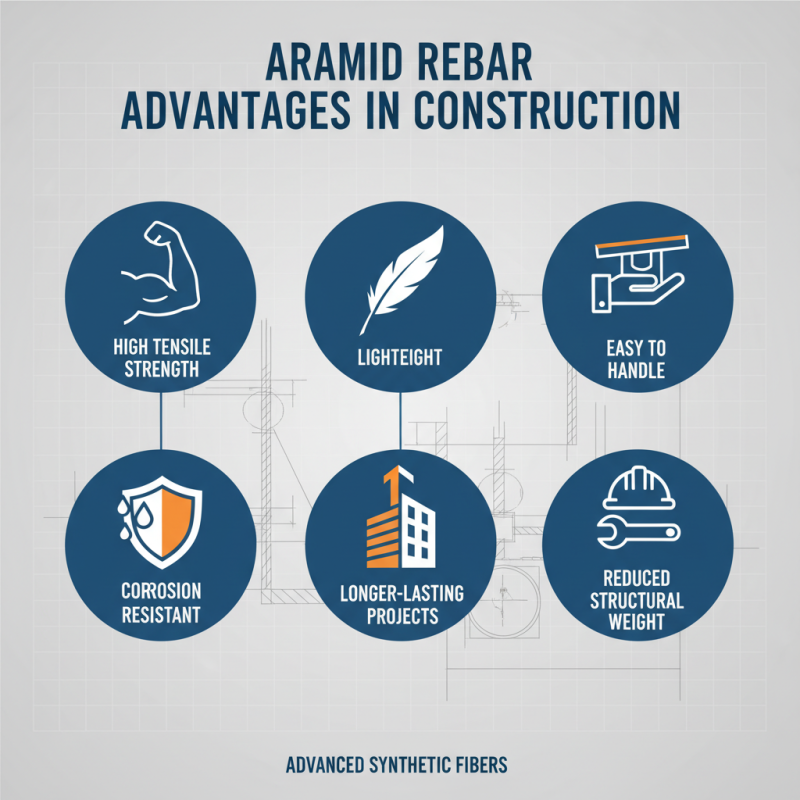
Aramid rebar is gaining traction in construction due to its unique properties. Made from advanced synthetic fibers, it offers high tensile strength and lightweight characteristics. This material is not only easy to handle, but also reduces the overall weight of structures. Builders appreciate the corrosion resistance it offers in harsh environments, leading to longer-lasting projects.
Using aramid rebar can significantly improve a project's durability. Unlike traditional steel rebar, it doesn't rust, which can lead to costly repairs. In applications such as bridges or coastal structures, its resistance to chemical attacks is crucial. Additionally, reduced thermal expansion means less risk of cracking in extreme temperatures.
However, some challenges exist with aramid rebar. It may not be suitable for all applications, and its cost can be higher than traditional materials. Engineers must carefully evaluate its use in new designs. Testing and adaptation are essential to ensure effective integration into existing construction practices.
Best Practices for Incorporating Aramid Rebar in Designs
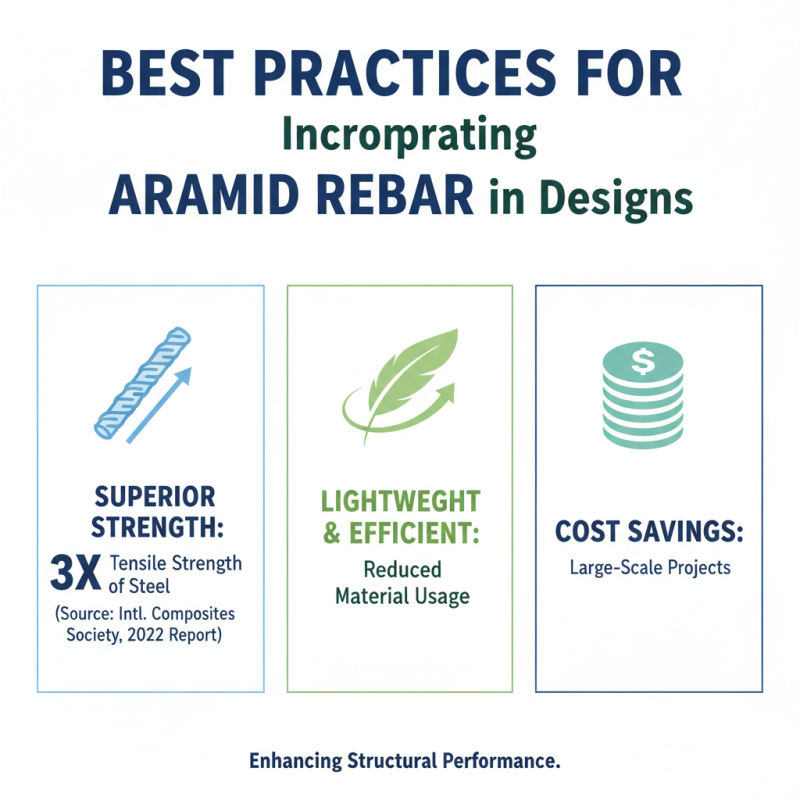
Incorporating aramid rebar into construction designs can significantly enhance structural performance. Aramid composites are lightweight yet incredibly strong. According to a 2022 report by the International Composites Society, aramid rebar exhibits over three times the tensile strength of traditional steel. This strength allows for reduced material usage, which can lead to cost savings in large-scale projects.
When integrating aramid rebar, consider project location and environmental factors. These materials perform well in corrosive environments due to their high resistance to chemicals. However, some studies suggest that designers must address thermal expansion differences between aramid and surrounding concrete. Ignoring this may lead to complications over time, such as cracking or delamination.
Adapting designs to include aramid rebar may involve changing how load distributions are calculated. Use software tools that account for the unique properties of aramid materials. By applying these best practices, construction projects can optimize both durability and sustainability. Proper training for workforce on installation techniques is necessary to prevent compromises in structural integrity.
Installation Techniques for Aramid Rebar in Concrete Structures
Installing aramid rebar in concrete structures requires precision and attention to detail. Begin by preparing the area thoroughly. Ensure the base is stable and clean. This helps the rebar bond effectively with the concrete. Use tools like a level to verify the placement of the rebar. Proper alignment is critical for optimal strength.
Tips: Always check the specifications for spacing of the aramid rebar. Incorrect spacing can compromise the structural integrity. Additionally, mark placements clearly on the ground. This helps in visualizing the installation throughout the process.
During installation, consider the flexibility of aramid rebar. It bends easily, which can be both an advantage and a challenge. While it allows for custom shapes, improper bending can weaken the material. Review your bends carefully to avoid mistakes that may require rework later.
Tips: To minimize errors, conduct a dry run of your installation first. Use markers to outline where everything should go. Reflect on how previous projects might inform better installation practices today.
Maintenance and Inspection of Aramid Rebar in Built Projects
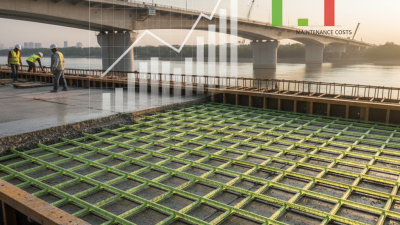
Inspecting and maintaining aramid rebar is crucial for the longevity of construction projects. Regular inspections help identify potential weaknesses. A structured approach should include visual checks for surface damage or corrosion. Inspecting connections and anchorage points is essential, as these areas often bear the most stress.
Maintenance should use non-destructive methods as much as possible. Technologies like ultrasonic testing can assess rebar integrity without causing damage. Documenting findings during each inspection creates a reliable history of the structure's condition. This record assists in predicting future maintenance needs.
Consider environmental factors that impact aramid rebar performance. High humidity or extreme temperatures may affect its properties. Addressing these conditions proactively is vital. Training staff on specific maintenance techniques enhances the effectiveness of the program. Reflect on past inspections to improve future maintenance strategies.
Usage and Maintenance of Aramid Rebar in Construction Projects