How to Choose Aramid Fiber Reinforced Rebar?

Choosing Aramid Fiber Reinforced Rebar requires more than comparing prices or tensile strength. The correct product must suit the structure, environment, and installation method. Practical project experience shows that small specification errors can create expensive delays later. Begin with the design loads, required bar diameter, development length, and concrete cover. Confirm whether the reinforcement is needed for corrosion resistance, electromagnetic transparency, or reduced structural weight.

Look closely at the fiber architecture and resin system. Aramid fibers provide high strength and low density, but performance depends on manufacturing quality. Ask for verified tensile properties, bond data, dimensional tolerances, and long-term durability results. Independent laboratory testing adds confidence. Supplier traceability matters, too. A reliable manufacturer should identify raw materials, production controls, and batch records.

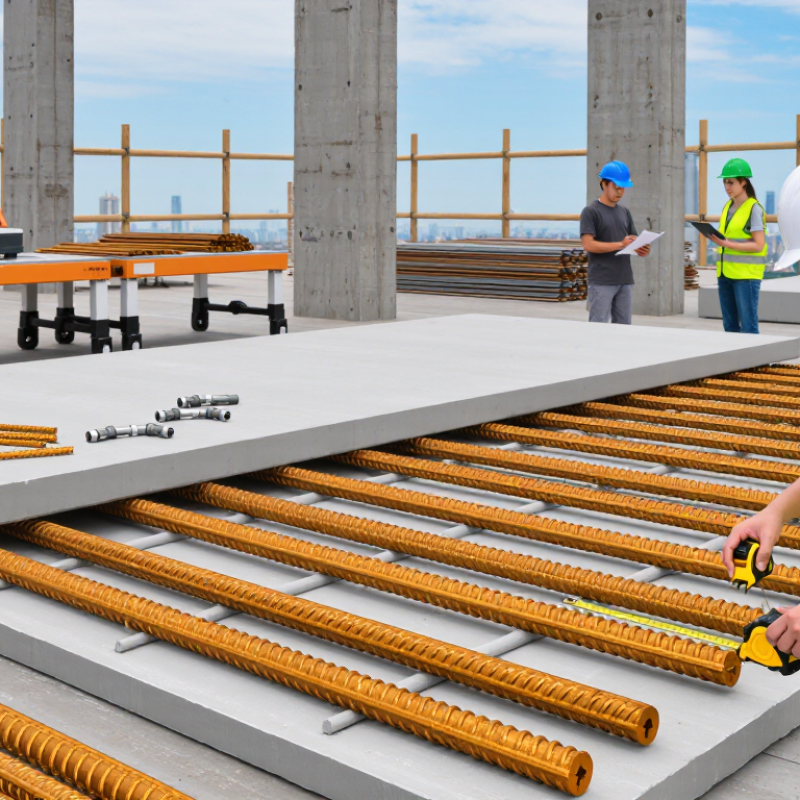
The jobsite deserves equal attention. Can workers cut and handle the bars without damaging the surface? Are approved tools and connection details available? Check compatibility with the concrete mix, anchorage design, bending limits, and local engineering requirements. Product certificates alone are not enough. The project engineer must review the complete system.

No single answer fits every project. A bar that performs well in a parking structure may not suit a bridge deck or industrial floor. I have seen selections based on catalog strength alone, with installation risks discovered too late. That approach needs reconsideration. Compare lifecycle value, not only purchase cost. Request samples, inspect the finish, and discuss real application evidence with the supplier. A careful choice makes Aramid Fiber Reinforced Rebar a dependable option rather than a hopeful experiment.

How to Choose Aramid Fiber Reinforced Rebar?

Understanding Aramid Fiber Reinforced Rebar and Its Main Properties

How to Choose Aramid Fiber Reinforced Rebar?

Aramid fiber reinforced rebar is a nonmetallic reinforcement made from high-strength aramid fibers and a polymer resin. Its key advantage is corrosion resistance in wet, salty, or chemically aggressive environments. The bars are also lightweight, nonmagnetic, and electrically nonconductive. Workers can handle them more easily than steel bars. That matters on crowded sites.

Its tensile strength can be impressive, but strength alone does not determine performance. Aramid rebar usually has a lower elastic modulus than steel. Therefore, reinforced concrete may experience wider cracks or greater deflection under service loads. Its bond with concrete depends on surface texture, resin quality, and correct anchorage. Diameter, rib pattern, bend limitations, and lap requirements deserve careful review.

Temperature resistance also needs honest attention. The fibers may perform well, but the surrounding resin can weaken during severe heat exposure. Direct sunlight, moisture absorption, and long-term creep should be checked through documented test data. A common mistake is treating aramid rebar as a simple steel substitute. It is not.

Choose a product with verified tensile properties, bond data, durability testing, and clear installation instructions. Confirm the design with a qualified structural engineer and applicable construction standards. Compare the calculated crack width, deflection, cover depth, and project exposure conditions. Small details matter. A lighter bar can simplify placement, yet poor detailing may erase that benefit.

Assessing Structural Requirements and Environmental Conditions

How to Choose Aramid Fiber Reinforced Rebar?

Environmental exposure should guide aramid fiber reinforced rebar selection, not material price alone. Start with moisture, chlorides, temperature, ultraviolet radiation, and chemical contact. A coastal parking deck faces salt spray and wet-dry cycles. An industrial floor may face acids, solvents, or thermal shock. Aramid reinforcement does not rust like steel, but its resin matrix and fiber interface still require careful evaluation. Check documented performance under alkaline, wet, and freeze-thaw conditions.

The NACE IMPACT study estimated global corrosion costs at approximately US$2.5 trillion annually, equal to 3.4% of global GDP. That figure explains why corrosion-resistant reinforcement deserves lifecycle analysis. However, avoiding corrosion does not remove every durability risk. ACI 440.1R requires environmental reduction factors and durability checks for FRP reinforcement. Review tensile retention, bond behavior, creep rupture, and service-temperature limits. Do not rely on room-temperature strength alone.

Project experience also exposes a common weakness. Specifications often describe exposure broadly, without measuring actual conditions. Record chloride levels, surface temperatures, humidity, and chemical concentrations when possible. Then compare them with test evidence from recognized standards, such as ASTM and ISO procedures. Aramid bars may suit harsh environments, but poorly protected surfaces can still age prematurely. I would request third-party test reports and batch traceability before approval. The selection remains imperfect when site data are missing. That uncertainty should be stated, not hidden.

Comparing Rebar Performance, Dimensions, and Design Compatibility

How to Choose Aramid Fiber Reinforced Rebar?

Comparing Rebar Performance, Dimensions, and Design Compatibility

Aramid fiber reinforced rebar offers corrosion resistance, low weight, and easy handling. Its performance differs sharply from steel. It does not yield before failure. The material behaves almost linearly under tension. That difference affects crack control, safety factors, and detailing decisions.

Check the nominal diameter, cross-sectional area, surface profile, and tensile capacity together. A lighter bar can simplify installation. However, its lower elastic modulus may require closer spacing or larger sections. Dimensions must match the structural drawings, not only the advertised diameter. Cover requirements also need review, especially in thin slabs and precast components. Small dimensional errors can change clear spacing quickly.

Design compatibility deserves careful attention. Confirm development length, lap details, bend limitations, and anchorage data from tested technical documents. Aramid bars may require factory-made bends because field bending can damage the reinforcement. They also cannot be treated as a direct steel replacement. An engineer should verify serviceability, fire performance, shear interaction, and long-term exposure conditions.

Be precise here.

In project reviews, a common weakness is choosing by tensile strength alone. That approach misses stiffness and detailing behavior. A spreadsheet may look complete while omitting construction tolerances. Real conditions are less tidy. Check bar storage, cutting methods, inspection records, and actual placement space before approving the design.

How to Choose Aramid Fiber Reinforced Rebar?

Comparing tensile performance, stiffness, dimensions, and design compatibility

The chart uses representative mid-range engineering values for commonly specified reinforcement materials. Aramid fiber reinforced polymer (AFRP) rebar offers high tensile strength, low density, and corrosion resistance, but its elastic modulus is lower than steel. Select the nominal diameter based on required tensile capacity, crack control, development length, bond behavior, fire exposure, and compatibility with the structural design. Actual properties vary by product and should be confirmed through project-specific technical data.

Design Compatibility Checklist

  • Use tensile strength and guaranteed design values rather than strength alone.
  • Check serviceability because AFRP has a lower elastic modulus than steel.
  • Confirm nominal diameter, rib or surface profile, bend limitations, and anchorage length.
  • Consider the absence of yielding and the need for appropriate strain-based design.
  • Verify durability, temperature limits, fire protection, and applicable design standards.

Verifying Product Quality, Standards, and Manufacturer Reliability

How to Choose Aramid Fiber Reinforced Rebar?

Choosing aramid fiber reinforced rebar starts with verifiable product evidence, not attractive claims. Check the published tensile strength, elastic modulus, bond performance, and resistance to moisture, chemicals, and alkalinity. These values should match independent laboratory reports. Ask whether testing followed applicable ASTM, CSA, ISO, or project-specific requirements. Standards matter. So does consistency.

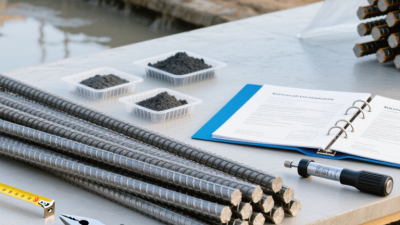
Inspect the product itself. The surface should appear uniform, with no loose fibers, resin-rich patches, cracks, or irregular diameter. Request samples from different production batches. Compare their dimensions and test results. A reliable supplier should provide batch numbers, production dates, technical data sheets, and traceable quality records. I would not trust one polished certificate alone. It may describe a good sample, not every shipment.

Manufacturer reliability becomes clearer through practical cooperation. Ask how the company handles nonconforming material, storage guidance, installation questions, and replacement requests. Review evidence from completed projects with similar exposure conditions. Speak with engineers who have actually used the reinforcement. Their experience can reveal handling problems that laboratory reports miss. Technical support should be specific, timely, and documented.

Do not overlook design compatibility. Aramid rebar behaves differently from steel, especially regarding stiffness, thermal response, and cutting methods. Confirm the design assumptions with a qualified structural professional. A lower purchase price may hide higher installation risks. I have found that careful verification takes more time than expected, but rushed approval creates harder problems later.

How to Choose Aramid Fiber Reinforced Rebar? - Verifying Product Quality, Standards, and Manufacturer Reliability

Verification Dimension What to Check Recommended Evidence Relevant Standard or Reference Practical Acceptance Guidance Risk if Not Verified
Product Identity Confirm that the reinforcement is a pultruded aramid-fiber-reinforced polymer bar and not a glass-, carbon-, or hybrid-fiber product represented under a similar abbreviation. Technical datasheet, product declaration, bill of materials, and a signed statement identifying the reinforcement fiber, resin system, surface treatment, nominal diameter, and bar profile. Project requirement
Use the contract specification and approved material submittal.
The fiber type, resin matrix, bar size, surface profile, and intended concrete application should be stated consistently across all documents. Incorrect design assumptions, unsuitable durability performance, and possible non-compliance with the structural specification.
Dimensional Accuracy Measure nominal diameter, cross-sectional area, length, straightness, rib or sand-coating profile, and visual uniformity. Factory inspection records, calibrated measurement equipment, sample measurements from each production lot, and delivery inspection results. ISO 10406-1 provides test methods for FRP bars and grids. Dimensional tolerances should be defined by the project specification or product standard adopted for the work. Dimensions should remain within the approved product drawing and declared tolerances. The surface should be continuous and free from exposed fibers, resin-rich voids, cracks, or delamination. Reduced bond, incorrect reinforcement area, placement difficulties, and unreliable cover or spacing.
Tensile Strength Verify ultimate tensile strength, tensile failure mode, test specimen preparation, and the number of specimens tested. Independent laboratory report showing individual results, average, coefficient of variation, specimen details, loading rate, failure location, and calibration records. ASTM D7205 is widely used for tensile testing of FRP bars. ISO 10406-1 also includes tensile test methods for FRP reinforcement. Use the characteristic or guaranteed value stated in the approved design documentation. Do not substitute an average test value for a characteristic design value without a documented statistical basis. Overestimation of reinforcement capacity and unsafe structural design.
Tensile Modulus Check the longitudinal tensile modulus and the strain measurement method used during testing. Stress-strain curves, extensometer or equivalent measurement details, individual test results, and laboratory accreditation information. ASTM D7205 and ISO 10406-1 provide relevant test procedures; the design standard determines how the modulus is used. The reported modulus should be based on the specified measurement range and should be consistent with the declared fiber architecture and resin system. Aramid-FRP modulus is not interchangeable with steel or other FRP types. Incorrect crack-width, deflection, development-length, or serviceability calculations.
Bond and Surface Profile Evaluate bond behavior between the bar and concrete, including rib geometry, helically wrapped fibers, sand coating, or other mechanical anchorage features. Bond test reports, surface-profile drawings, coating adhesion records, and evidence that the tested surface configuration matches the supplied product. ISO 10406-1 includes test methods for bond-related performance of FRP reinforcement. Project-specific bond provisions may also apply. Bond data should be available for the exact bar diameter and surface treatment. Tensile strength alone is not evidence of adequate anchorage in concrete. Bar slip, excessive crack widths, inadequate development length, and poor load transfer.
Durability and Alkali Resistance Assess retention of tensile strength and modulus after exposure to alkaline concrete pore solutions, moisture, temperature, and other project-specific environments. Conditioned-versus-unconditioned test results, exposure duration, solution composition, temperature, specimen dimensions, and post-exposure failure data. ISO 10406-1 contains durability-related test methods. Acceptance criteria must be taken from the governing project specification or design standard. Require retention results for the complete bar system, including fiber, resin, coating, and surface treatment. Avoid relying only on raw-fiber chemical-resistance claims. Long-term loss of strength, bond deterioration, and premature service-life failure.
Moisture and Freeze-Thaw Performance Review performance after water absorption, wet-dry cycling, freeze-thaw cycling, or other environmental conditioning relevant to the project location. Environmental conditioning protocol, mass-change data, mechanical-retention results, and a comparison with unconditioned control specimens. ISO 10406-1 may be used as a test-method reference; the project durability specification should define exposure conditions and performance limits. Testing should represent the actual resin system and surface treatment. The report should identify whether strength, modulus, bond, or all three properties were measured after conditioning. Unrecognized degradation in marine, cold-region, wet, or repeatedly saturated concrete environments.
Temperature and Fire Exposure Check the glass-transition temperature of the resin, strength retention at design temperatures, thermal expansion behavior, and fire-protection requirements. DSC or equivalent resin thermal analysis, elevated-temperature tensile or bond data, fire design documentation, and installation limitations. ASTM D4065 and ASTM E1640 are commonly used for polymer thermal analysis. Fire resistance must be evaluated under the applicable building and fire code. Do not treat a high fiber melting or decomposition temperature as proof of fire resistance. The resin matrix and concrete cover strongly influence elevated-temperature behavior. Loss of bond or stiffness during fire and incorrect assumptions about structural fire resistance.
Electrical and Magnetic Properties Confirm whether the bar must be nonconductive, nonmagnetic, or electrically insulating for MRI rooms, rail systems, power facilities, or other sensitive installations. Electrical resistance or conductivity data, magnetic-response statement, test method, and confirmation that metallic coatings or accessories are not present. Application-specific
Requirements depend on the facility owner and project specification.
Verify the complete installed reinforcement system, including couplers, ties, chairs, spacers, and any metallic components. Electromagnetic interference, stray-current concerns, or failure to meet facility-specific restrictions.
Quality Management Assess control of raw materials, pultrusion temperature, curing, fiber alignment, resin content, surface treatment, lot identification, and nonconforming-product handling. Quality manual, process-control plan, internal audit records, calibration certificates, nonconformance procedure, and traceability records. ISO 9001 certification can support quality-system evaluation, but it does not by itself certify structural performance or product compliance. Quality certification should be current and cover the manufacturing site and relevant product scope. Production controls should be linked to measurable product characteristics. Variable strength, inconsistent dimensions, undocumented changes, and difficult root-cause investigation.
Independent Certification Determine whether the product has third-party certification, listing, or evaluation for the intended structural application. Current certificate, scope of certification, surveillance records, test reports, certificate validity dates, and documented limitations. Use the certification scheme recognized by the project owner, engineer, authority having jurisdiction, or governing national standard. Check that the certificate covers aramid-FRP bars, the supplied diameter range, the exact surface profile, and the intended environmental exposure. Acceptance delays, additional testing costs, or rejection by the approving authority.
Lot Traceability Ensure each bundle can be traced to production date, raw-material batch, line or shift, inspection results, and shipping records. Bundle labels, certificates of conformity, batch records, test-lot references, delivery documents, and retained production samples. Contract requirement
Traceability rules should be defined in the purchase and inspection documents.
Every delivered bundle should carry a durable identification mark that matches the material certificate and packing list. Inability to isolate defective material or prove that delivered bars match tested samples.
Handling and Installation Guidance Review permitted bending, cutting, drilling, lifting, storage, tying, lap, anchorage, and repair procedures. Installation manual, approved shop drawings, training records, field inspection checklist, and written restrictions on field modification. Follow the governing FRP design standard and the manufacturer’s approved installation instructions. Bars should be protected from impact, excessive ultraviolet exposure, contamination, and unauthorized heating or field bending. Damaged bars should be quarantined and assessed. Hidden damage, reduced bond, incorrect anchorage, and installation-related capacity loss.
Design Data and Documentation Confirm that design values, reduction factors, creep-rupture data, environmental factors, development provisions, and serviceability parameters are available. Design manual, characteristic properties, durability reduction factors, creep-rupture test data, sample calculations, and engineer-reviewed technical submittal. ACI 440.11 is specifically written for GFRP-reinforced concrete and should not automatically be treated as an aramid-FRP acceptance standard. Use the applicable local code and project-approved design basis. Design values must correspond to aramid-FRP and the exact product configuration. Where no directly applicable code exists, obtain project-specific engineering approval. Use of inappropriate reduction factors or design equations and potential non-approval by the authority having jurisdiction.
Manufacturer Reliability Evaluate production capacity, delivery consistency, technical support, warranty terms, complaint handling, and experience with comparable applications without relying solely on marketing claims. Audited production records, reference projects with verifiable documentation, capacity statement, delivery-performance records, warranty terms, and corrective-action history. Procurement due diligence
Apply the owner’s approved-vendor and supplier-audit requirements.
Prefer suppliers able to provide stable lot traceability, independent test evidence, change-notification procedures, and documented technical support throughout construction. Supply interruptions, inconsistent product quality, weak technical response, and costly disputes over nonconforming material.
Pre-Approval Testing Test representative samples before purchase approval and repeat verification after major process, resin, fiber, coating, or production-site changes. Sampling plan, chain-of-custody records, accredited laboratory report, retained samples, and comparison with the approved reference data. ASTM D7205 and ISO 10406-1 are suitable reference methods for relevant FRP-bar testing, subject to project approval. Use samples from normal production rather than specially selected demonstration specimens. Define retest rules and nonconformance actions before delivery. Qualification of a product that is not representative of routine production.

Important: ASTM D7205 and ISO 10406-1 provide recognized test methods, while the applicable design code, national standard, project specification, and authority having jurisdiction determine the required acceptance criteria. Because aramid-FRP reinforcement is not covered by every FRP-rebar code, obtain written engineering approval whenever the governing standard does not explicitly address the product.

Selecting the Right Aramid Fiber Reinforced Rebar for the Project

Choosing aramid fiber reinforced rebar begins with the project environment, not the product catalog. Review chloride exposure, moisture, temperature changes, and expected service life. A coastal parking structure needs different protection from an indoor equipment room. Check the design loads, crack-width limits, bar spacing, and required diameter with a qualified structural engineer.

Bond behavior deserves close attention. Aramid fiber reinforced rebar is lighter than steel, but its surface treatment strongly affects concrete adhesion. Request verified pull-out data, tensile strength, elastic modulus, and long-term durability results. Do not compare tensile strength alone. That shortcut can mislead.

Cutting and bending also influence selection. Many aramid bars are supplied straight and should not be bent on site without approved procedures. Confirm available lengths, lap requirements, splice details, and compatible anchorage methods before ordering. A small storage mistake matters. Keep the bars dry, clean, and protected from abrasion. Field crews should avoid dragging them across rough ground.

Project documentation must identify recognized testing methods and applicable structural provisions. Ask for batch traceability and installation guidance. A neat calculation can still miss handling losses or unusual support conditions. That assumption can be wrong. Allow the engineer to review actual drawings, exposure data, and construction methods before final approval.