Why Choose Composite Gfrp Rebar for Construction? The answer begins with corrosion. The NACE IMPACT study estimated global corrosion costs at approximately $2.5 trillion annually, equal to 3.4% of global GDP. That figure makes reinforcement durability more than a technical preference. It becomes a maintenance decision.
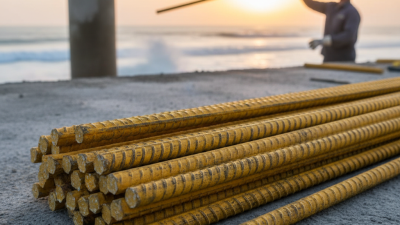
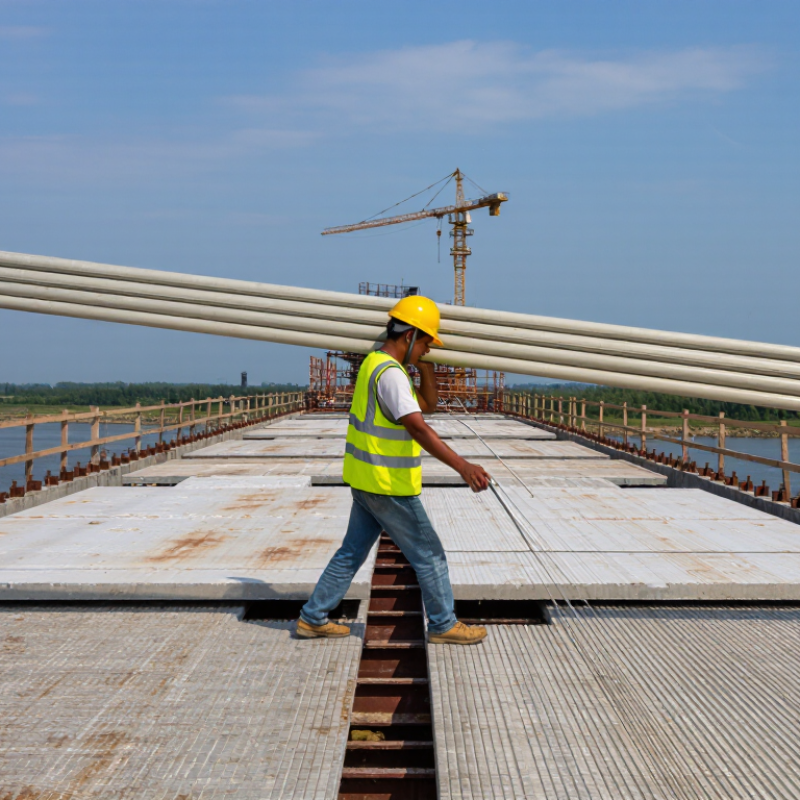
Composite Gfrp Rebar offers corrosion resistance, low weight, and electromagnetic neutrality. A worker can carry long bars across a bridge deck without the strain associated with steel. The material also avoids rust staining around cracks and exposed surfaces. The American Concrete Institute’s ACI 440.11-22 provides design provisions for GFRP-reinforced concrete structures. FHWA research and demonstration projects further document GFRP applications in highway bridges and transportation infrastructure. These sources support practical use, not just laboratory enthusiasm.
Professor Antonio Nanni, a leading authority on FRP construction, has said, “FRP reinforcement is a viable alternative to steel reinforcement.” That statement deserves careful interpretation. GFRP is not a universal replacement. Its lower elastic modulus can produce wider cracks and greater deflection under service loads. Designers must also consider bond behavior, fire exposure, creep rupture, and connection details. Ignoring these limits would weaken the case.
The choice is project-specific. Coastal decks, parking structures, water facilities, and chemically exposed slabs may gain substantial value from corrosion-resistant reinforcement. Long-term savings depend on detailing, workmanship, and credible life-cycle analysis. The material looks promising. Better judgment still matters.
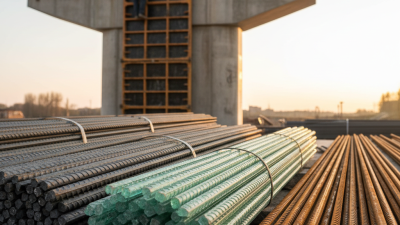
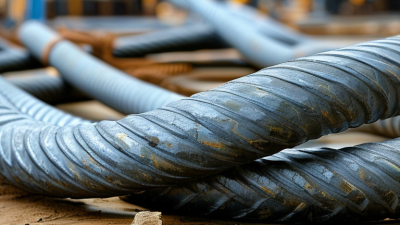
Composite GFRP rebar is reinforcement made from continuous glass fibers embedded in a polymer resin. The fibers carry tensile loads, while the resin holds them together and protects them from moisture. Its ribbed or sand-coated surface helps concrete grip the bar. In simple terms, it looks like reinforcement steel, but its material behavior is different.
GFRP rebar is lightweight and does not rust. A worker can carry long lengths across a wet jobsite with less effort. It also has low electrical conductivity, which can help in selected structures near sensitive equipment. However, it is not steel. GFRP generally has a lower elastic modulus and can show wider cracks under service loads. It also fails without much warning after reaching its tensile limit. That detail matters.
The material can suit bridge decks, marine structures, parking areas, and concrete exposed to deicing salts. Engineers must check design standards, bar diameter, bond performance, temperature effects, and allowable deflection. Cutting usually requires suitable dust control and protective equipment. Handle it carefully. Field observations often reveal a simple problem: crews bend GFRP bars like steel, causing damage or incorrect placement. It should be fabricated and installed according to approved drawings. GFRP is useful, but it is not a universal replacement. Project conditions should decide its value.
GFRP rebar is a non-metallic reinforcing bar made from glass fibers embedded in a polymer resin. Its low density can reduce handling weight compared with conventional steel reinforcement, while its non-corrosive composition makes it suitable for concrete exposed to moisture, salts, and chemical environments.
The chart compares representative material densities. GFRP typically has a density of about 1.8–2.0 g/cm³, while carbon steel is approximately 7.85 g/cm³. Lower density can make GFRP reinforcement easier to transport, carry, and install. Actual values vary according to the material formulation and product specification.
Composite GFRP rebar is made by pulling continuous glass fibers through a resin bath. The resin binds the fibers and provides chemical protection. This pultrusion process forms straight bars with consistent dimensions. Heat then cures the resin inside a controlled production line. Surface ribs or sand coatings improve the bond with concrete. The result is a lightweight reinforcement material that does not rust in the usual steel sense.
Manufacturers should test tensile strength, fiber content, surface bond, and dimensional tolerance. Engineers then select bar sizes according to load, crack control, temperature, and service conditions. On site, workers cut GFRP rebar with suitable abrasive tools and wear eye protection. They should not bend standard bars around a column without approved procedures. GFRP behaves differently from steel. It has high tensile strength but lower stiffness, so deflection may control the design.
Small details matter. Bars need proper supports before concrete placement. Excessive foot traffic can disturb spacing or damage surfaces. I would also verify the design assumptions against local codes and project testing, because one table rarely fits every structure. The material is not flawless. Poor storage, sharp handling, or inaccurate lap details can reduce performance. In coastal walls, bridge decks, and wastewater structures, its resistance to corrosion can reduce maintenance concerns, but only when installation quality remains consistent.
| Data Dimension | Typical GFRP Rebar Information | Construction Relevance |
|---|---|---|
| Material composition | Continuous glass fibers embedded in a thermoset polymer resin, commonly vinyl ester, epoxy, or polyester. | The glass fibers provide tensile strength, while the resin binds the fibers, transfers stress, and protects them from the surrounding environment. |
| Manufacturing process | Usually produced by pultrusion: glass rovings are aligned, impregnated with resin, shaped through a heated die, cured, surface-finished, and cut to length. | Continuous production creates a consistent longitudinal fiber structure and allows ribbed or sand-coated surfaces for concrete bond. |
| Typical tensile strength | Approximately 600–1,200 MPa, depending on fiber content, resin system, diameter, and test method. | GFRP can provide high tensile capacity, but structural design must use the certified product properties rather than a generic range. |
| Elastic modulus | Typically about 40–60 GPa, which is lower than the approximately 200 GPa modulus of steel. | GFRP-reinforced members may require crack-width and deflection checks because GFRP is less stiff than steel. |
| Density | Approximately 1.9–2.1 g/cm³, compared with approximately 7.85 g/cm³ for carbon steel. | For an equivalent bar volume, GFRP is commonly about one-quarter the mass of steel, which can reduce handling and transportation effort. |
| Corrosion resistance | Nonmetallic and electrically nonconductive; resistant to chloride-induced corrosion and many deicing-salt environments. | Useful for bridge decks, marine structures, parking facilities, wastewater facilities, and other exposure conditions where steel corrosion is a major concern. |
| Magnetic and electrical behavior | Nonmagnetic and generally electrically nonconductive. | Can be considered near magnetic-resonance imaging facilities, sensitive electrical equipment, substations, and applications requiring reduced electromagnetic interference. |
| Thermal behavior | The resin matrix softens and loses mechanical performance at elevated temperatures; fire resistance depends on the complete concrete assembly and design. | Fire-rating requirements, temperature exposure, concrete cover, and applicable design provisions must be reviewed before specifying GFRP. |
| Failure behavior | GFRP behaves as a linear-elastic material until rupture and does not yield like conventional steel reinforcement. | Design must account for brittle rupture behavior, reinforcement ratio, development length, shear, and serviceability requirements. |
| Cutting and fabrication | Bars are commonly cut with abrasive blades or diamond tools. Field bending is generally not permitted; bends are normally manufactured in controlled conditions. | Plan bar lengths, bends, hooks, couplers, and placement details before delivery to avoid damage and rework on site. |
| Concrete bond | Bond is developed through a molded ribbed surface, helically wrapped fibers, or an aggregate coating, depending on the product design. | Adequate development and lap lengths must follow the applicable design standard and the tested bond performance of the selected bar. |
| Installation handling | Lightweight, nonrusting, and typically supplied in straight lengths or prefabricated shapes. | Manual handling may be easier, but bars should be supported correctly and protected from cuts, abrasion, excessive bending, and prolonged ultraviolet exposure before placement. |
| Common applications | Bridge decks, marine structures, seawalls, parking structures, roads, tunnels, retaining walls, wastewater facilities, and concrete repairs. | Particularly suitable where corrosion durability, low weight, or nonmagnetic performance is more important than steel-like ductility. |
| Design standards | Design and product evaluation may reference standards such as ACI 440.11, CSA S806, CSA S807, ASTM D7957, and applicable local codes. | The governing project code, environmental exposure, certified material data, and installation requirements should be confirmed by the project engineer. |
| Main advantages | High tensile strength-to-weight ratio, corrosion resistance, low density, nonmagnetic behavior, and reduced maintenance exposure in aggressive environments. | Can extend service life and reduce lifecycle corrosion risk when correctly designed, detailed, installed, and protected. |
| Key limitations | Lower stiffness than steel, brittle tensile rupture, sensitivity of the resin matrix to high temperatures, and limited field-bending capability. | GFRP is not a direct one-for-one substitution for steel; structural calculations and detailing must be revised for the specific project. |
Note: Property ranges are representative industry values for pultruded GFRP reinforcement. Actual values vary by product, diameter, resin system, fiber content, testing method, exposure condition, and governing standard. Always use the manufacturer’s certified technical data and the project engineer’s approved design.
On a concrete site, GFRP rebar offers practical construction benefits beyond corrosion resistance. Its glass fibers and polymer matrix do not rust when moisture and chlorides reach the reinforcement. This can protect concrete structures near coastlines, bridges, parking decks, and water-treatment facilities. Longer service life may reduce repairs, traffic closures, and replacement work.
Lighter handling is another clear advantage. Workers can move long bars with less lifting equipment and fewer people. Cutting also requires simple, approved tools rather than heavy steel-cutting equipment.
GFRP is nonmagnetic and electrically nonconductive, which helps in hospitals, laboratories, rail systems, and facilities containing sensitive equipment. Less disruption matters.
However, the material is not a direct steel substitute. GFRP has a lower elastic modulus, so engineers may need larger bar sizes or closer spacing to control cracking and deflection. It also behaves differently near high temperatures and can fail without noticeable yielding. Design calculations, approved standards, and project-specific testing remain essential.
Field observations often show installation mistakes at bends, supports, and connections.
Small errors matter. Crews should avoid dragging bars across rough ground and should protect exposed surfaces from damage.
Cutting dust requires suitable respiratory and eye protection. A qualified engineer should verify lap lengths, concrete cover, anchorage, and load assumptions before placement.
Claims of zero maintenance need restraint, because concrete quality, workmanship, drainage, and environmental exposure still control real performance.
GFRP rebar changes the comparison with steel from weight to durability. Its density is typically 1.9–2.1 g/cm³, compared with steel at about 7.85 g/cm³. ACI 440.11-22 recognizes GFRP reinforcement for structural concrete design. Workers can carry longer bars across a site with less lifting equipment. That matters on bridges, parking decks, and coastal projects. GFRP also does not rust like carbon steel. FHWA corrosion studies report that corrosion-related damage creates major maintenance costs in reinforced concrete infrastructure. GFRP can reduce this exposure, especially where chlorides reach the reinforcement.
The differences require careful design. Steel usually has a modulus near 200 GPa, while common GFRP bars measure roughly 40–60 GPa. Concrete cracks may therefore appear wider under similar service loads. GFRP also fails without steel’s visible yielding. It breaks suddenly when its tensile capacity is exceeded. This is not a small detail. Engineers must follow code-based limits for crack width, deflection, anchorage, and fire performance. ASTM D7957 covers certain solid round GFRP bars used for concrete reinforcement, but project specifications still need review. GFRP can outperform steel in corrosive environments, yet it is not automatically cheaper. Handling damage, drilling mistakes, and unfamiliar detailing can erase expected savings. A direct one-for-one substitution is a poor assumption. Good results depend on drawings, testing, and experienced installation crews.
GFRP rebar selection should begin with structural demand, not corrosion resistance alone. ACI 440.1R-15 reports typical GFRP tensile strengths from 483 to 1,600 MPa. Its elastic modulus is usually only 35 to 60 GPa. This difference matters. GFRP can carry high tension, but deflection and crack width often control design.
Check the numbers carefully.
The required bar diameter, surface profile, bend radius, and lap length should match the approved design method. ACI 440.11-22 applies a 0.55 resistance factor for tension-controlled flexural members. Temperature also deserves attention. GFRP loses stiffness as temperatures approach its resin’s glass-transition temperature. Fire exposure can therefore change the reinforcement strategy, even when corrosion is not a concern. The National Cooperative Highway Research Program’s Report 679 also highlights creep rupture, bond, and serviceability as key design considerations.
Project experience adds practical filters. Confirm bar tolerances, batch traceability, resin quality, and field cutting procedures. Do not assume every ribbed surface provides identical bond performance. Some early specifications focused heavily on ultimate strength and overlooked long-term deflection. That was a costly assumption. A small trial panel, with measured crack widths and installation observations, can reveal problems before full placement. Selection should also consider handling weight, available bent shapes, concrete cover, and local engineering acceptance. GFRP is not automatically the best choice. It becomes convincing when durability, serviceability, temperature, and construction control are evaluated together.