Top 10 Types of Basalt Rebar for Global Buyers
Choosing the right Basalt Rebar requires more than comparing diameter and price. Global buyers must examine fiber quality, resin performance, surface design, manufacturing consistency, and project conditions. A bar that performs well in a dry bridge project may need different protection in coastal concrete. Moisture, temperature changes, concrete chemistry, and installation methods can alter long-term results.
This guide introduces ten practical types of basalt rebar available across international markets. These categories may include ribbed, sand-coated, helically wound, smooth, epoxy-modified, and application-specific designs. Each type offers different bonding behavior, handling characteristics, and purchasing considerations. Buyers should request technical datasheets, batch records, tensile test results, and dimensional reports before approving a supplier. Certification claims also deserve careful review. A logo alone proves little.
Real project experience shows that small details matter. A rough surface can improve mechanical interlock. However, excessive coating may complicate cutting or joining. Lightweight rolls can reduce transport effort, yet workers still need suitable tools and training. No single type wins every project. That distinction is easy to miss.
The following overview connects material features with real procurement decisions, including structural use, corrosion exposure, shipping, storage, and quality control. It also recognizes an uncomfortable point: product descriptions are not always consistent between manufacturers. Therefore, responsible buyers should compare test methods, not only headline numbers. Local engineering approval remains essential, especially for bridges, foundations, marine structures, and seismic applications. Good purchasing begins with evidence, not promises.
Basalt Rebar Fundamentals for Global Construction Buyers
Top 10 Types of Basalt Rebar for Global Buyers
Basalt Rebar Fundamentals for Global Construction Buyers
Basalt rebar is a fiber-reinforced polymer bar made from melted volcanic rock fibers and resin. Its density is about 2.0 g/cm³, compared with approximately 7.85 g/cm³ for steel. This difference can reduce lifting effort and transport weight on construction sites. The ten common formats include straight ribbed bars, sand-coated bars, helically wrapped bars, twisted bars, mesh, grids, stirrups, bent bars, dowels, and prefabricated cages.
Surface design matters. Ribbed and sand-coated profiles improve mechanical anchorage inside concrete. Mesh and grids suit slabs, walls, and repair overlays. Bent bars require controlled factory forming because field bending may damage the composite. Buyers should request tensile, bond, shear, alkaline-resistance, and elevated-temperature test results. ISO 10406-1 and ASTM D7205 provide useful testing references, although neither replaces project-specific engineering approval.
The International Energy Agency reports that cement production creates roughly 7% of global carbon dioxide emissions. Basalt rebar may support lower-impact designs, but its environmental advantage depends on resin content, transport distance, service life, and manufacturing energy. The evidence is promising, not complete. A common purchasing mistake is comparing tensile strength alone. Basalt rebar has a lower elastic modulus than steel and can require wider crack-control checks. Procurement teams should review regional design codes, concrete cover, diameter tolerances, batch traceability, and long-term durability data. Some supplier documents remain inconsistent. Independent verification is worth the extra time.
Classification of Basalt Rebar by Form, Structure, and Use
Top 10 Types of Basalt Rebar for Global Buyers
Classification of Basalt Rebar by Form, Structure, and Use
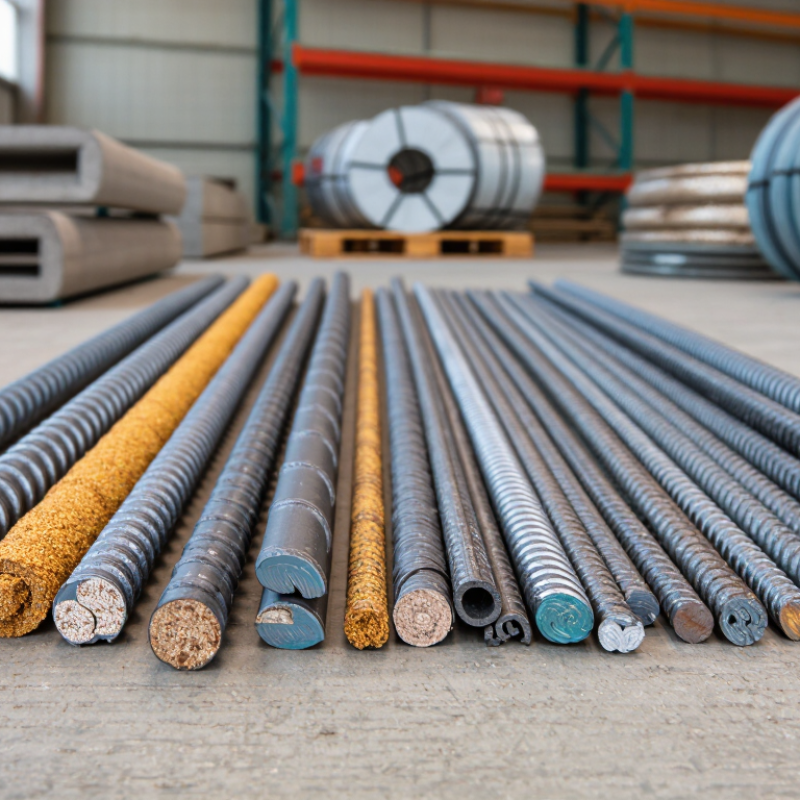
Basalt rebar differs by form, internal structure, and project role. The ten practical types are straight bars, coiled rods, threaded bars, ribbed bars, smooth bars, sand-coated bars, helically wrapped bars, mesh, stirrups, and prefabricated cages. Straight and ribbed bars suit slabs, beams, and walls. Coiled rods reduce transport space for continuous reinforcement. Threaded bars support anchoring, although installation quality remains critical.
Smooth bars work in selected nonstructural applications. Sand-coated bars improve bond with concrete. Helically wrapped bars can provide stronger mechanical interlock. Mesh fits thin panels and pavements. Stirrups control shear zones. Prefabricated cages speed repetitive foundation work. By structure, buyers should compare solid pultruded cores, surface ribs, winding patterns, and resin content. Published technical reviews commonly report basalt-FRP tensile strengths near 800–1,500 MPa and densities around 1.9–2.1 g/cm³. These figures vary considerably.
ACI 440.1R guidance emphasizes that FRP reinforcement has no yielding plateau. Design must address rupture and serviceability. ASTM D7205 testing also shows why tensile results need consistent specimen preparation. A 2023 infrastructure-materials review reported lower embodied energy for some basalt composites than steel, but its boundaries excluded transport and resin production. That limitation matters. In field trials, careless bending or rough cutting can damage the surface, even when catalog strength looks impressive. Buyers should request batch test reports, bar geometry, alkali resistance data, and actual bond results. Supplier claims alone are not enough.
Ten Major Types of Basalt Rebar in the International Market
International buyers usually encounter ten major types of basalt rebar in the international market.
These types differ by surface, geometry, resin, and delivery form. Common options include smooth straight bars, sand-coated bars, ribbed bars, helically wrapped bars, grooved bars, threaded bars, bent bars, prefabricated stirrups, basalt rebar mesh, and epoxy-resin bars.
Each type suits a different construction detail.
Smooth bars simplify handling, but their bond performance requires careful design. Sand-coated and ribbed surfaces improve mechanical anchorage in concrete. Helically wrapped bars provide continuous surface contact. Grooved profiles can support stable load transfer. Threaded bars help with mechanical connections. Bent bars and stirrups reduce cutting work at the jobsite. Mesh supports repeated spacing in slabs and panels. Epoxy-resin bars offer strong chemical resistance, while vinyl-ester and polyester variants serve other cost and durability targets.
Material selection should follow verified test data.
ISO 10406-1:2015 provides test methods for FRP reinforcement bars. ASTM D7205 also evaluates tensile properties. A 2024 Grand View Research assessment forecasts an 8.5% compound annual growth rate for the broader FRP rebar market through 2030. That figure signals expanding demand, not automatic product quality. Basalt rebar standards remain less uniform than steel standards. This is easy to overlook. Buyers should compare tensile strength, modulus, bond behavior, bar diameter, resin content, and bend-radius limits. A stronger surface may still create difficult field cutting. Real project conditions matter.
Performance and Application Comparison Across Basalt Rebar Types
Top 10 Types of Basalt Rebar for Global Buyers
Performance and Application Comparison Across Basalt Rebar Types
Basalt rebar performance changes with surface design, shape, and installation method.
Ribbed basalt rebar offers stronger concrete bonding and suits slabs, walls, and foundations. Smooth bars slide more easily, making them useful for dowels, ties, and selected repair work. Sand-coated bars improve mechanical grip, especially where concrete cover is limited. Helically wound bars provide reliable anchorage, but workers must inspect overlaps carefully. Epoxy-coated basalt rebar adds surface protection, although coating damage can reduce its practical value.
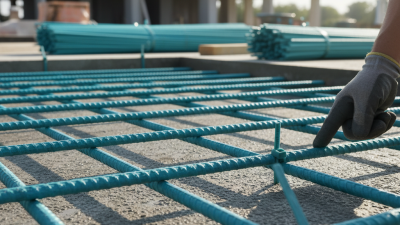
Mesh panels support fast placement in pavements, thin walls, and precast sections. Basalt stirrups improve shear reinforcement in beams and columns. Bent bars fit corners and congested reinforcement zones, but factory bending quality matters greatly. Straight bars remain easier to transport and cut on site. Basalt tendons or prestressing elements serve specialized structures requiring controlled tension, not ordinary reinforcement replacement.
Basalt rebar is lightweight and resistant to corrosion, which helps in marine decks, bridge repairs, and wastewater facilities. It also has low electrical and thermal conductivity. However, its lower elastic modulus than steel can increase crack widths or deflection under service loads. That detail is often overlooked. Designers should verify local standards, cover requirements, bond data, and fire performance before selection. Field experience suggests that careless cutting creates avoidable waste. The comparison is useful, but project-specific testing still matters.
Global Purchasing Criteria for Quality, Standards, and Supply Chains
Global buyers comparing the top ten types of basalt rebar should begin with project requirements, not marketing claims. Diameter, surface profile, tensile strength, and elastic behavior directly affect concrete design. Confirm the required standard with the engineer and local authority. Different regions may accept different test methods. A product can pass one specification and still require additional verification elsewhere.
Request batch-specific test reports, factory quality records, and clear material traceability. Check whether results come from accredited laboratories. Do not rely on a generic certificate. It is easy to overtrust paperwork. Inspect sample bars for consistent ribs, clean cuts, and visible identification. Practical checks often reveal packaging or handling problems before installation.
Supply reliability matters as much as mechanical performance. Ask about production capacity, minimum order quantities, lead times, and replacement procedures. For ocean shipments, review pallet strength, moisture protection, and container loading photographs. Basalt rebar should arrive straight, dry, and undamaged. A barcode or batch number should connect each bundle to its test record. Keep a realistic buffer for customs and port delays. Some buyers overlook this. That mistake can interrupt reinforcement schedules and increase site costs. Experienced procurement teams compare landed cost, not only the quoted unit price. They also record nonconformities and adjust future supplier evaluations.