| Applicable product standard |
Confirm the required reinforcing-bar specification, grade, and edition in the project documents. |
Mill test certificate identifies the applicable standard and grade, such as ASTM A615/A615M or ASTM A706/A706M where specified. |
These standards address defined product requirements; the project specification and local code determine which one applies. |
| Bar identification and traceability |
Match bar markings, tags, bundle numbers, sizes, and heat numbers to the shipping documents and certificates. |
Legible markings and a documented link between delivered bundles and test certificates. |
Traceability helps confirm that inspected and tested material is the material delivered to the site. |
| Mechanical properties |
Review yield strength, tensile strength, elongation, and any bend-test results required by the specified standard. |
Heat-specific test results reported on the mill test certificate and compliant with the project’s specified grade. |
Mechanical properties affect structural design assumptions and fabrication requirements. |
| Dimensions and mass |
Check nominal bar size, length, and applicable dimensional or mass tolerances. |
Measurements and certificate details consistent with the governing product standard and purchase specification. |
Correct dimensions support bar scheduling, placement, cover, and quantity control. |
| Ribs and deformation pattern |
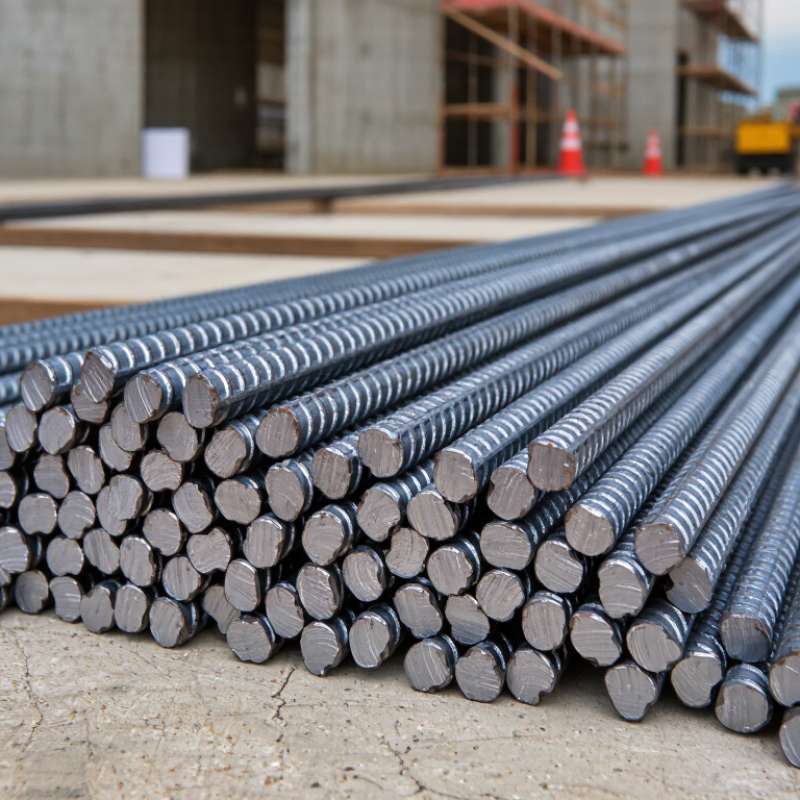
Inspect that transverse ribs remain distinct and that ribs, bar markings, and profile have not been excessively worn or damaged. |
Visual inspection and, where required, dimensional checks against the specified standard or approved product data. |
Reinforcing-bar deformation is part of the specified product geometry and contributes to bond behavior. |
| Sandblasted surface condition |
Check for loose abrasive, dust, oil, grease, loose rust, scale, and damage; confirm the intended surface condition with the engineer or project specification. |
Clean, dry bars with no visible loose contamination; documented inspection criteria for the project. |
Sandblasting is a surface-preparation process, not a substitute for product certification or acceptance under the rebar standard. |
| Corrosion and storage condition |
Look for pitting, section loss, deep corrosion, standing water, and contamination during transport or storage. |
Inspection records, suitable drainage and separation from soil, and corrective action for material outside project acceptance criteria. |
Surface preparation does not restore metal lost through corrosion; acceptance should follow the governing project requirements. |
| Weldability, if required |
Determine whether the design or fabrication plan requires welding and whether the specified rebar grade is suitable for that use. |
Grade documentation and welding procedures meeting the applicable code and project requirements. |
Not all reinforcing bars have the same welding requirements; welding should not be assumed acceptable based on appearance alone. |
| Supplier quality system |
Ask how the supplier controls sourcing, batch identification, inspection, nonconforming product, and document retention. |
Written quality procedures, inspection records, and clear processes for resolving discrepancies. |
Consistent controls reduce the risk of receiving mixed grades, undocumented material, or incorrectly processed bars. |
| Delivery and documentation |
Confirm quantities, bar sizes and lengths, delivery schedule, packaging, and documents required at receiving. |
Purchase-order confirmation, packing list, certificates, and a defined process for reporting shortages or damage. |
Reliable delivery coordination supports inspection, storage, and construction sequencing. |
| Pre-purchase verification |
Clarify whether sandblasting is required, who performs it, what acceptance criteria apply, and whether it affects any coating or fabrication step. |
Written scope, approved inspection criteria, and any required sample or pre-shipment inspection agreed before dispatch. |
Clear requirements prevent disputes about surface appearance and help ensure processing matches the project specification. |