How to Choose Composite Rebar FRP for Your Next Construction Project?
In the evolving landscape of construction materials, choosing the right options is crucial. Composite Rebar FRP (Fiber Reinforced Polymer) has gained traction for its strength and longevity. According to a recent report by the Global Composites Market, the market for composite materials, including Composite Rebar FRP, is projected to grow by 8% annually through 2027. This growth highlights the increasing confidence in these innovative materials.
Expert opinions further illuminate this trend. Dr. Emily Carter, a leading researcher in composite materials, states, "The future of construction lies in integrating composite technologies." Such insights emphasize the necessity of understanding the distinct advantages that Composite Rebar FRP offers. From resistance to corrosion to lighter weight, the benefits are compelling. However, challenges remain in assessing the long-term performance of these materials.
While Composite Rebar FRP presents numerous advantages, it is vital to approach these innovations with a balanced perspective. Questions around cost, availability, and installation techniques require careful examination. This decision-making process should be informed by both empirical data and experienced professionals in the field. Understanding these complexities is essential for successful outcomes in your next construction project.

Understanding Composite Rebar FRP: Material Properties and Benefits
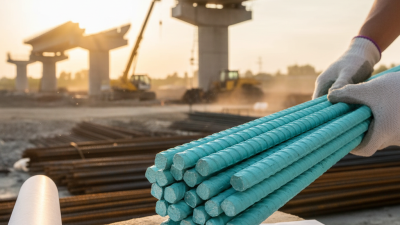
Composite rebar, made from fiber-reinforced polymer (FRP), offers numerous advantages in construction. These materials provide high tensile strength and corrosion resistance. Unlike traditional steel rebar, composite rebar does not rust. This property can lead to longer service life for structures exposed to harsh environments. The lightweight nature of FRP makes handling and installation easier. This can reduce labor costs and time on-site.
Understanding the thermal and electrical properties of composite rebar is essential. FRP is a poor conductor of heat and electricity. This can be beneficial in specific applications, preventing thermal bridging and enhancing safety in certain constructions. Moreover, composite rebar is non-magnetic, which makes it suitable for critical facilities like hospitals and data centers. Nevertheless, engineers must consider the cost implications and ensure proper design integration.
While the benefits are clear, some drawbacks require reflection. For example, the initial cost of composite rebar can be higher than steel. However, reduced maintenance costs may balance this over time. Proper education on installation techniques is crucial, as misuse can lead to performance issues. Understanding these aspects will empower builders to make informed decisions.
Material Properties of Composite Rebar FRP Compared to Steel Rebar
Key Factors to Consider When Selecting Composite Rebar for Structural Use
When selecting composite rebar for structural use, it’s essential to understand the material properties. Composite rebar, often made from fiberglass or other polymers, offers advantages over steel. It’s lightweight, resistant to corrosion, and has a high strength-to-weight ratio. These features can lead to significant savings on labor and transportation costs.
The environmental conditions of your project site play a significant role. High moisture and aggressive chemicals can compromise steel rebar. Composite rebar, however, excels in such environments. Its resistance to chemical reactions makes it suitable for marine structures and chemically exposed sites. Testing the rebar's durability under specific conditions is critical.
Cost should not be the only deciding factor. While composite rebar may have a higher initial cost, its longevity and maintenance needs can offset this over time. Consulting with industry professionals to assess your specific project requirements is advisable. Understanding the full implications of your choice can lead to better long-term performance. Consider your project’s unique challenges, as well, as composite rebar may not fit every scenario perfectly.
Performance Metrics: Comparing Composite Rebar FRP to Traditional Steel Rebar
Composite rebar made from fiber-reinforced polymers (FRP) is gaining popularity in construction. Its unique properties can outperform traditional steel rebar in certain aspects. For instance, composite rebar is significantly lighter, making it easier to handle. This reduces labor costs and speeds up installation. Moreover, FRP is corrosion-resistant, which is essential for structures exposed to harsh environments.
When it comes to tensile strength, FRP rebar offers competitive performance compared to steel. However, it is important to note that under extreme loads, traditional steel may still have the upper hand. This creates a dilemma when engineers need to decide based on specific project requirements. Some may overlook the potential cost savings from using lightweight materials. Durability is a critical factor. While composite rebar shows promise, long-term performance data is still being gathered.
Designing with composite rebar also presents challenges. The bonding properties with concrete differ from steel. Additional testing may be necessary to ensure adequate performance. Understanding the advantages and limitations of composite rebar is crucial for making informed decisions. Each project may have unique requirements that dictate the best material choice. The decision should reflect a careful balance of performance metrics and project needs.
Performance Metrics: Comparing Composite Rebar FRP to Traditional Steel Rebar
| Metric |
Composite Rebar FRP |
Traditional Steel Rebar |
| Weight (lbs/ft) |
1.5 |
4.0 |
| Corrosion Resistance (years) |
50+ |
20 |
| Tensile Strength (ksi) |
100 |
60 |
| Modulus of Elasticity (ksi) |
15,000 |
29,000 |
| Cost per Ton ($) |
1,800 |
600 |
| Thermal Conductivity (W/m·K) |
0.15 |
50 |
Cost Analysis: Evaluating the Economic Impact of Composite Rebar in Projects
When evaluating the economic impact of composite rebar in construction projects, it's vital to consider initial costs versus long-term benefits. Composite rebar, known for its corrosion resistance and lightweight properties, can drive significant cost savings over time. According to a report from the American Concrete Institute, using composite rebar can reduce repair and maintenance costs by up to 40% in harsh environments. This highlights the financial advantages of investing in composite materials upfront.
It's also essential to factor in the efficiency of installation. Composite rebar weighs less than traditional steel, which can decrease labor costs during installation. For example, projects using composite rebar reported up to a 20% reduction in labor time due to easier handling and placement. However, it’s crucial to ensure workers are adequately trained in handling composite materials, as some installation techniques differ from traditional methods.
Consider the lifespan of the project as well. While the upfront investment may be higher, the longevity of composite rebar could lead to lower total ownership costs. In environments prone to chemical exposure, composite rebar often outlasts steel, potentially creating overall savings. Monitoring these elements will lead to more informed decisions, ensuring that economic factors align with project goals.
Applications of Composite Rebar FRP in Different Construction Scenarios
Composite Rebar FRP (Fiber Reinforced Polymer) offers unique advantages in various construction scenarios. Its lightweight nature allows for easier handling and installation compared to traditional materials. In bridge construction, it reduces the load on structural elements while providing excellent corrosion resistance. According to a recent industry report, using composite rebar can extend the lifespan of bridges by up to 45% due to its durability in harsh environments.
In underground construction, the applications are equally compelling. FRP rebar is non-conductive and non-magnetic, making it ideal for projects that require electromagnetic neutrality. This factor is crucial in tunnels or metro constructions, where equipment may be sensitive to magnetic fields. Reports indicate that using composite rebar can lower overall maintenance costs by approximately 30% in these scenarios, translating to significant savings over the structure's life.
However, using composite rebar does come with challenges. It may not be suitable for all applications, especially in areas imposing heavy structural loads. Engineers must carefully analyze project requirements before choosing this material. Additionally, while initial costs may be higher, long-term benefits often justify the investment. Understanding these intricacies is essential for making informed decisions in the selection of materials for modern construction projects.