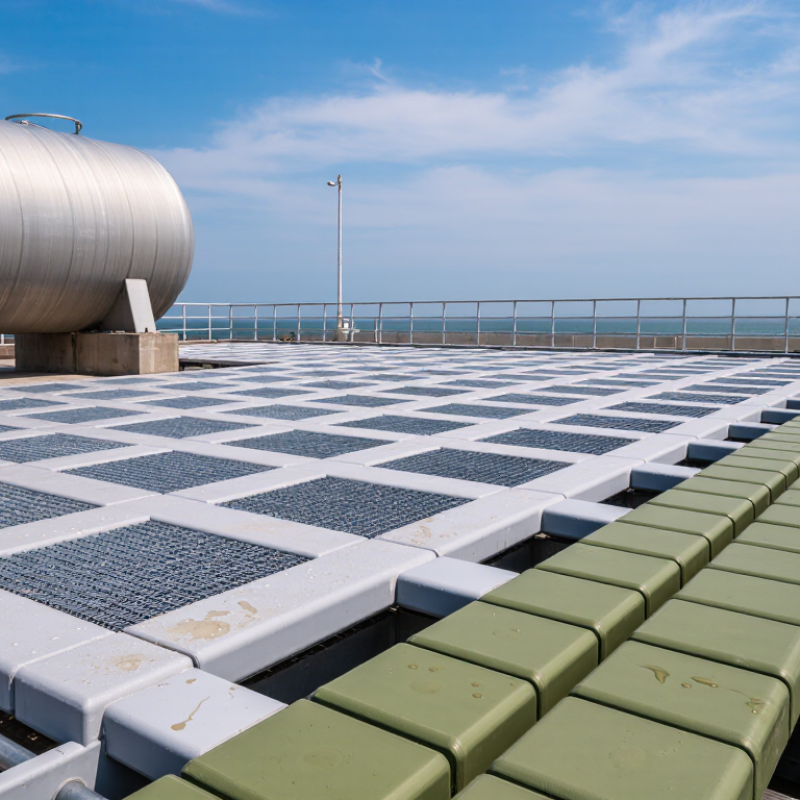
2026 Best Molded Fiberglass Grating for Global Buyers?

Choosing the best Molded Fiberglass Grating in 2026 requires more than comparing prices or resin colors. Global buyers must examine load capacity, corrosion exposure, slip resistance, fire behavior, and installation conditions. A platform beside a chemical tank faces different demands from a walkway near seawater. Small details matter.

Dr. Stephen Tsai, a respected composites researcher, offers a useful design principle: “Composite design begins with the load path, not the material label.” This idea applies directly to molded fiberglass grating selection. Buyers should confirm whether the panel supports pedestrians, maintenance carts, or concentrated equipment loads. They should also review bearing-bar dimensions, mesh opening, surface finish, resin system, and tested deflection. The wrong specification may look acceptable during delivery. It can still fail expectations after months of ultraviolet exposure, moisture, or chemical contact.

Reliable sourcing also depends on factory experience. Ask for product drawings, load tables, batch records, and relevant test reports. Verify whether the quoted performance applies to the exact panel size and span. Do not rely only on attractive photographs. That is an easy mistake.

A strong supplier should explain resin options clearly, including polyester, vinyl ester, and phenolic systems. Certifications should be relevant, current, and traceable. Regional compliance may differ, so buyers need local engineering review before approval. Even this approach is not perfect. Published data may not reproduce every real-site condition. Careful questioning remains essential. This guide compares practical selection factors for global buyers seeking safer, longer-lasting, and more dependable molded fiberglass grating solutions.

2026 Best Molded Fiberglass Grating for Global Buyers?

What Is Molded Fiberglass Grating and How Does It Work?

What Is Molded Fiberglass Grating and How Does It Work?

Molded fiberglass grating combines glass fibers with a thermoset resin in a heated mold. The process creates one integrated panel, rather than welded joints. Glass strands carry structural loads, while resin protects them from moisture, chemicals, and corrosion. Under foot traffic, the grating spreads loads across intersecting bars. Deflection still matters. A strong panel can feel unsafe if its span is poorly designed.

A 2024 Grand View Research assessment estimated the global fiberglass market at more than USD 15 billion, with continued growth expected through the decade. This wider market supports steady material availability for infrastructure projects. Reports from MarketsandMarkets also identify corrosion-resistant composites as important in water treatment, chemical processing, and industrial construction. These sectors often choose molded grating because it reduces painting and replacement work.

Surface texture is practical, not decorative. Grit embedded in the resin helps maintain traction near drains, tanks, and oily walkways. Designers should verify span, load rating, bar spacing, fire performance, and chemical compatibility through documented test data. ASTM-based testing can help compare flame spread and structural behavior, but test results may not represent every installation. That limitation is easy to overlook. Global buyers should request independent certificates, clear tolerances, and installation records before approving a shipment.

Key Materials, Manufacturing Methods, and Structural Features

2026 Best Molded Fiberglass Grating for Global Buyers?

Molded fiberglass grating combines resin and continuous glass fibers in a rigid, corrosion-resistant panel. Common resin choices include polyester, vinyl ester, and phenolic systems. Polyester suits many general industrial areas. Vinyl ester offers stronger resistance to acids, solvents, and harsh moisture. Phenolic grades can support lower smoke and flame performance requirements, where verified testing is available.

Manufacturing details affect reliability. Glass roving is placed through the mold, saturated with resin, and cured under controlled heat and pressure. This creates an integrated grid instead of separate bonded bars. A concave or grit surface improves traction around wet tanks and washdown zones. Square openings reduce weight while allowing drainage, airflow, and light penetration. Reinforced load bars help panels span channels, platforms, and access areas.

Specify panel depth, span, load type, support spacing, resin grade, and surface finish before ordering. Engineers should review tested load tables, dimensional tolerances, UV exposure data, and fire performance documents. Installation also matters; poorly aligned supports can cause unexpected deflection. A cheaper panel may appear suitable, yet its resin content or fiber distribution may be inconsistent. That risk deserves attention. Blindly comparing price per square meter can mislead global buyers, especially when freight, cutting, fasteners, and replacement work are included. Some projects still need custom testing because local temperature, chemicals, and foot traffic rarely match catalog assumptions.

2026 Best Molded Fiberglass Grating for Global Buyers? - Key Materials, Manufacturing Methods, and Structural Features

Evaluation Dimension Key Specification Typical Data or Options Global Buyer Considerations
Product Definition Molded fiberglass grating A one-piece, load-bearing panel made by molding continuous fiberglass reinforcement and resin into an integral grid structure. The integral construction eliminates mechanically joined bearing bars and helps provide consistent load distribution across the panel.
Primary Reinforcement Fiberglass reinforcement E-glass fibersContinuous strandsWoven or assembled roving E-glass is widely used because it offers a practical combination of tensile strength, electrical insulation, corrosion resistance, and cost.
Resin System Thermosetting polymer matrix Orthophthalic polyesterIsophthalic polyesterVinyl esterPhenolic Polyester is commonly selected for general industrial service; vinyl ester is typically preferred for more aggressive chemical exposure; phenolic grades can support low-smoke and low-flame applications when properly certified.
Manufacturing Method Compression molding Reinforcement and resin are placed in a heated mold and compressed under controlled pressure until cured. Suitable for repeatable panel geometry and high-volume production. Buyers should request confirmation of cure temperature, pressure, and quality-control procedures.
Manufacturing Method Resin transfer or closed-mold processing Dry reinforcement is positioned in a mold, resin is introduced, and the assembly is cured in a controlled mold cavity. Can provide good dimensional consistency and reduced surface emissions compared with some open-mold processes, subject to the producer’s process design.
Panel Construction Integral square or rectangular mesh Common mesh openings include approximately 19 × 19 mm, 25 × 25 mm, 38 × 38 mm, and 40 × 40 mm, depending on the application. Smaller openings help reduce dropped-object risk and improve walking comfort; larger openings can reduce weight and improve drainage.
Surface Profile Slip-resistant walking surface Grit-topConcave topMeniscus surfaceSmooth molded surface Grit-top and concave profiles are commonly selected for wet, oily, muddy, or industrial environments. The correct profile should be matched to the expected contamination and footwear.
Standard Panel Thickness Panel depth Common molded-grating depths are approximately 25, 30, 38, and 50 mm, with other sizes available for project-specific loading. Thickness alone does not determine capacity. Span, support spacing, load type, mesh geometry, resin system, and safety factors must be checked together.
Load-Bearing Structure Two-directional molded grid Intersecting load-bearing bars form a continuous panel; the main load path is normally aligned with the shorter support span. Installation drawings should identify the load direction, support locations, panel orientation, fastening points, and allowable deflection criteria.
Mechanical Performance Strength and stiffness Performance varies by panel depth, mesh size, glass content, resin, span, and loading. Product-specific load tables are required for design. Do not substitute a steel or pultruded-grating load table. Obtain tested or engineered span and deflection data for the exact molded panel configuration.
Weight Advantage Handling and installation weight Fiberglass-reinforced polymer grating is generally lighter than comparable steel grating, although the exact difference depends on depth, mesh, and load rating. Lower weight can reduce manual-handling effort and structural support requirements, but lifting plans and local occupational-safety rules still apply.
Corrosion Resistance Resistance to moisture and chemicals Good resistance to water, salts, many acids, alkalis, and industrial chemicals when the resin system is correctly selected. Chemical compatibility must be verified against concentration, temperature, exposure duration, cleaning agents, and possible chemical mixtures.
Electrical Properties Electrical insulation Fiberglass grating is nonconductive and does not provide the same electrical current path as metallic grating. Useful around electrical equipment, substations, and cable areas, but the complete installation should still be assessed for grounding, static control, and applicable electrical codes.
Thermal Behavior Temperature service range The usable range depends on resin chemistry, cure quality, load, and exposure. Many standard polyester systems are used in moderate-temperature environments, while specialized systems support higher service temperatures. Request a temperature rating based on continuous exposure, short-term excursions, chemical contact, and the required mechanical load.
Fire Performance Flame and smoke characteristics Fire performance depends on resin formulation, additives, panel design, and certification. Flame-spread and smoke results must be stated against a recognized test method. For offshore, marine, transit, and enclosed facilities, request current test reports rather than relying on general “fire-resistant” wording.
UV and Weathering Outdoor durability UV-resistant resin formulations, surface veils, and suitable pigments can improve outdoor weathering performance. Long-term outdoor projects should specify UV exposure, color retention expectations, inspection intervals, and any required protective finish.
Dimensional Stability Expansion and contraction Fiberglass grating has lower thermal conductivity than metals and experiences thermal movement according to its resin and reinforcement system. Allow for expansion at large installations and follow the specified joint, clip, and perimeter-clearance details.
Cutting and Fabrication On-site modification Panels can generally be cut with carbide or diamond-tipped tools. Cut edges should be sealed with a compatible resin or coating where specified. Use dust extraction and appropriate respiratory, eye, skin, and hearing protection because fiberglass cutting can generate irritating dust and fibers.
Fastening System Mechanical clips and anchors M-clipsC-clipsL-clipsHold-down clipsCountersunk fasteners Fastener material should be compatible with the service environment. Clip spacing and edge restraint must follow the project’s loading and wind-uplift requirements.
Safety Features Pedestrian and workplace safety Slip-resistant surface, visible color options, nonconductive construction, and optional toe-plate integration. Specify opening size, slip-resistance requirement, toe-board height, handrail interface, accessibility needs, and local workplace regulations.
Common Applications Industrial and infrastructure use Walkways, platforms, stair treads, trench covers, wastewater facilities, chemical plants, marine areas, cooling towers, and electrical sites. Select the resin, surface profile, load rating, and fire specification according to the actual operating environment rather than the application name alone.
Design Verification Engineering documentation Load-span tables, deflection limits, material data sheets, chemical-resistance charts, fire reports, drawings, and installation instructions. A complete technical submittal should identify panel size, depth, mesh, resin, surface, support span, design load, allowable deflection, and applicable test standards.
Quality Inspection Incoming and pre-shipment checks Visual finish, dimensions, mesh opening, thickness, flatness, color consistency, surface condition, labeling, packaging, and document review. For international orders, agree on inspection timing, sampling level, packing method, moisture protection, and photographic records before production begins.
Maintenance Routine cleaning and inspection Remove debris, inspect clips and supports, check for damaged panels, and wash with water or a compatible mild detergent. Avoid unverified solvents, abrasive cleaning, excessive heat, and incompatible chemicals. Replace panels showing structural damage or severe resin deterioration.
Sustainability Consideration Service life and material efficiency Long service life in corrosive environments can reduce replacement frequency; the product combines glass reinforcement with a thermoset resin matrix. Ask for service-life assumptions, repairability guidance, end-of-life options, and project-specific environmental declarations where required.
Best-Buying Checklist Minimum information for quotation Application, dimensions, support span, design load, mesh opening, panel depth, resin type, surface profile, color, fire requirement, quantity, destination, and standards. The most suitable molded fiberglass grating is the one that satisfies the complete structural, chemical, safety, installation, and documentation requirements—not simply the lowest unit price.

How to Compare Molded Fiberglass Grating for Global Applications

When comparing molded fiberglass grating for global applications, start with the duty, not the quotation. A 2024 MarketsandMarkets report forecasts the global FRP composites market to grow at about 7% annually through 2028. That growth reflects demand for corrosion-resistant structures, but it does not make every grating panel suitable for every site. Record span, worker traffic, wheel loads, chemical exposure, temperature, and drainage needs. A 38 mm panel may perform well on a walkway yet deflect noticeably across a longer opening.

Check the construction details. Molded grating should use continuous glass strands, consistent resin distribution, and a verified load table. Compare safe working loads, deflection limits, panel dimensions, bearing requirements, and test methods. ASTM-related test documentation can support flame-spread, load, and slip claims, while project specifications may require additional regional certification. Ask for resin type and chemical-resistance data. Polyester, vinyl ester, and phenolic systems behave differently in acids, solvents, heat, and fire conditions.

Surface texture matters. A grit-top finish can improve traction near washdown areas, but it may increase cleaning effort and wear footwear. Consider UV exposure, salt spray, forklift movement, and replacement access. The International Energy Agency reported that global renewable capacity additions reached nearly 510 GW in 2023, creating more outdoor platforms and maintenance walkways. That trend increases the value of lightweight, corrosion-resistant grating. Still, a lower purchase price can hide higher support costs. I would request samples, loading calculations, and traceable quality records before approval. Product comparisons sometimes look precise, but site conditions remain imperfect.

Industry Standards, Safety Factors, and Environmental Performance

2026 Best Molded Fiberglass Grating for Global Buyers?

For global buyers, molded fiberglass grating should be judged against recognized industry standards, not appearance alone. Relevant specifications may include ASTM, EN, or ISO test methods, depending on the project location. Ask for documented load testing, dimensional tolerances, resin data, and fire-performance results. Details matter.

Safety factors deserve close attention. The correct panel depends on span, pedestrian traffic, equipment weight, impact risk, and support spacing. A grating rated for a short span may become unsafe across a wider opening. Field inspections often find loose clips, uneven supports, or unplanned cuts. Installation quality matters as much as the panel itself. A product can pass testing yet fail after poor installation. That point is easy to underestimate.

Environmental performance is equally practical. Fiberglass grating resists moisture, salt spray, and many industrial chemicals, reducing corrosion-related maintenance. However, resin selection must match ultraviolet exposure, temperature changes, and chemical contact. Drainage openings can limit standing water, while textured surfaces improve traction in wet areas. Buyers should request weathering and slip-resistance evidence, not general promises. Recycled content may reduce material impact, but end-of-life disposal remains difficult for composite products. Not always. A balanced specification should consider service life, maintenance frequency, worker safety, and responsible replacement planning.

Buying, Installing, and Maintaining Molded Fiberglass Grating Worldwide

Global buyers should select molded fiberglass grating by service conditions, not appearance alone. Measure span, load, panel depth, surface texture, resin performance, and opening size. In coastal plants, corrosion resistance matters more than a low purchase price. In sunny regions, confirm UV stability and color retention data. Cold climates demand attention to impact behavior and ice buildup. Ask for test reports, dimensional tolerances, fire performance, and traceable quality records. Do not rely on a generic “heavy duty” label. It says too little.

Before installation, inspect every panel for cracks, warping, or damaged bearing bars. Store panels flat, raised from wet ground, and protected from direct sunlight. Use accurate supports with the specified spacing. Poor support spacing can cause uncomfortable deflection, even when the panel looks strong. Cut with dust control, then seal exposed fibers with a compatible resin system. Wear eye, skin, and respiratory protection during cutting. Align load-bearing bars correctly. Secure panels with corrosion-resistant clips suited to the structure. Tighten fasteners firmly, but avoid crushing the grating. That mistake is common.

Maintenance should match the environment and traffic. Inspect busy walkways monthly, especially around drains, ladders, and equipment bases. Remove oil, mud, leaves, and salt deposits before they reduce slip resistance. Rinse with clean water, then use mild detergent when needed. Avoid harsh chemicals unless compatibility is confirmed. Check clips, supports, edges, and panel movement after storms or heavy deliveries. Replace damaged sections instead of patching uncertain areas. Keep records with dates, photos, and observed wear. I have seen maintenance plans fail because inspections were scheduled, but never documented. A short field note can prevent a costly surprise.