2026 Top Trends in Construction Using Basalt Rebar Technology?
As the construction industry evolves, new materials emerge, offering fresh solutions. One such innovation is Basalt Rebar. This advanced material provides unique advantages over traditional steel reinforcement. Made from volcanic rock, it boasts high tensile strength and corrosion resistance.
The year 2026 promises significant trends in construction that utilize Basalt Rebar technology. Designers and builders increasingly recognize its environmental benefits. However, there are challenges with its implementation. Some construction teams still lack familiarity with Basalt Rebar. Training programs are crucial for bridging this knowledge gap.
Moreover, while Basalt Rebar offers many benefits, it can come with a higher initial cost. This may deter some projects from adopting it. Yet, the long-term durability can lead to overall savings. As the industry navigates these complexities, the potential of Basalt Rebar remains exciting. The journey towards more sustainable construction continues.
2026 Overview of Basalt Rebar Technology in Construction
Basalt rebar technology is making waves in construction. This innovation offers an alternative to conventional steel.
According to a recent industry report, basalt fiber-reinforced polymers (BFRP) can last 60% longer than traditional materials.
This durability significantly reduces repair costs over time.
The lightweight nature of basalt rebar makes it easier to handle.
Fewer workers are needed on site.
However, challenges remain. Not all contractors are familiar with this technology.
Training is crucial to ensure proper installation.
In some cases, improper use can lead to structural issues.
In 2026, the demand for sustainable options will rise.
Basalt rebar aligns with this trend. It is eco-friendly and has low thermal expansion.
Reports estimate that up to 30% of construction projects may implement this technology.
Yet, there is a learning curve. Existing regulations may not fully accommodate basalt materials.
Awareness and education will be key for widespread adoption.
Key Benefits of Using Basalt Rebar Over Traditional Materials
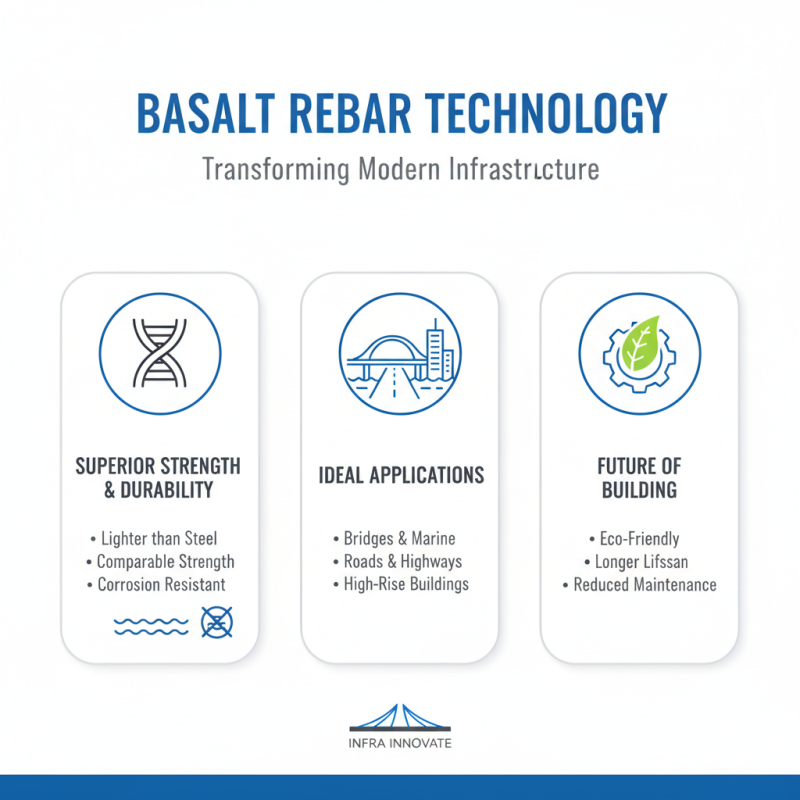
Basalt rebar technology is transforming the construction industry. This innovative material offers several advantages over traditional steel reinforcement. Its lightweight nature makes it easy to transport and handle. The flexible properties allow it to adapt to various structures. Plus, it is resistant to corrosion, which is a significant concern in many environments.
Using basalt rebar can lead to lower maintenance costs over time. Traditional materials often require frequent inspections and replacements due to rust. In contrast, basalt remains stable in harsh conditions and doesn’t deteriorate as easily. However, the initial investment might be higher. Some builders hesitate to adopt this new technology, fearing the unknown. It’s essential to weigh the long-term savings against initial expenses carefully.
Another interesting aspect is its environmental impact. Basalt rebar is made from natural volcanic rock, making it a sustainable option. It requires less energy to produce compared to steel. However, sourcing and processing need to be examined closely to ensure true sustainability. While the benefits are significant, the construction industry must still navigate these complexities.
Innovative Applications of Basalt Rebar in Modern Infrastructure
Basalt rebar technology is transforming modern infrastructure. This durable material is lighter than steel but offers comparable strength. Its resistance to corrosion makes it ideal for structures near water. Builders are increasingly using basalt rebar in bridges, roadways, and even high-rise buildings.
In applications, basalt rebar shows promise in seismic zones. Its flexibility can absorb shock better than traditional materials. This helps in maintaining structural integrity during earthquakes. Furthermore, its thermal stability offers advantages in extreme temperatures. However, some experts mention challenges in widespread adoption. The cost of production and local availability can be limiting factors.
Sustainability is a key factor driving innovation. Basalt is abundant and recyclable, minimizing environmental impact. Engineers are exploring its use in prefabricated components. These can speed up construction timelines and reduce labor costs. Yet, there is a need for more research. Understanding long-term performance in diverse environments is vital for broader acceptance.
Sustainability and Environmental Impact of Basalt Rebar Solutions
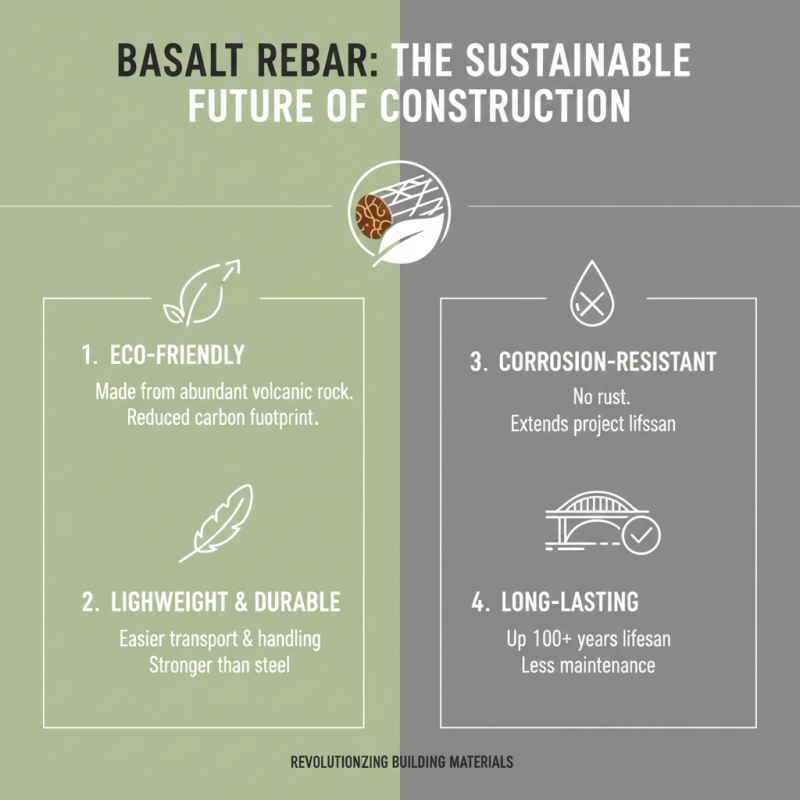
In recent years, basalt rebar technology has gained attention for its sustainability. This alternative to traditional steel rebar shows promise for reducing environmental impact. Made from volcanic rock, basalt rebar is lightweight and highly durable. It doesn’t corrode like steel. This property can extend the lifespan of construction projects.
However, the production process of basalt rebar requires energy. While it’s less harmful than steel, there’s still a carbon footprint. Some argue that improving recycling methods should be a priority. Is the initial manufacturing energy worth the long-term benefits? This remains an area for reflection and exploration.
Basalt rebar solutions can contribute to greener construction. Reduced weight leads to less energy during transport. It potentially lowers emissions from logistics. Still, the overall impact depends on local practices and regulations. There’s no one-size-fits-all answer. Continued assessment is essential for understanding real benefits.
Future Prospects and Market Trends for Basalt Rebar Technology in 2026
The construction industry is evolving rapidly. In 2026, basalt rebar technology is set to gain significant traction. This lightweight, corrosion-resistant material offers a sustainable alternative to traditional steel rebar. As projects demand more eco-friendly solutions, basalt rebar stands out for its minimal environmental impact.
Future prospects suggest that more companies will adopt basalt rebar. Its durability has proven beneficial for infrastructure in harsh environments. However, some challenges remain. The market still needs to educate stakeholders on the advantages of basalt. Costs can also be a barrier for smaller projects. Connecting with research and development teams may help address these issues.
Investments in basalt rebar technology are likely to intensify. Engineers are increasingly recognizing its potential. Expansion in usage will depend on collaboration across sectors. Creating awareness about its benefits is crucial for wider acceptance. The construction landscape is changing, and it is vital to consider these shifts.