Top 10 Benefits of Composite Gfrp Rebar in China?

The use of Composite Gfrp Rebar is gaining traction in China’s construction sector. This innovative material offers unique advantages compared to traditional steel rebar. It presents a compelling alternative due to its superior properties, making it increasingly popular among engineers and builders.

Composite Gfrp Rebar is lightweight yet strong. Its corrosion resistance contributes to the longevity of structures. This is particularly important in environments with high moisture levels. Moreover, the rebar’s non-conductive nature can be a safety benefit in certain applications. However, some still question its long-term performance in extreme conditions.

Nonetheless, many projects have successfully utilized Composite Gfrp Rebar, highlighting its versatility. Urban infrastructure, bridges, and even offshore applications can greatly benefit from this material. As the demand grows, ongoing research will further enhance its reliability. Understanding these benefits is crucial for future developments in the construction industry and for making informed choices.
Top 10 Benefits of Composite Gfrp Rebar in China?

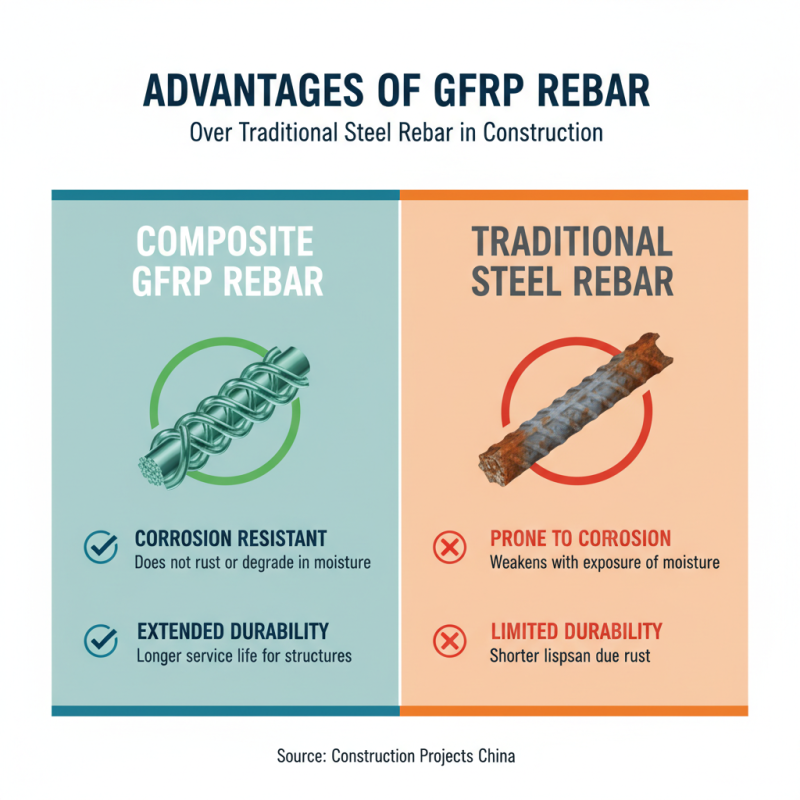
Advantages of Composite GFRP Rebar over Traditional Steel Rebar
Top 10 Benefits of Composite Gfrp Rebar in China?

Composite GFRP (Glass Fiber Reinforced Polymer) rebar presents several notable advantages over traditional steel rebar in construction projects across China. One major benefit is its resistance to corrosion. Traditional steel is prone to rust when exposed to moisture. This leads to structural weaknesses over time. In contrast, GFRP rebar remains intact despite harsh conditions, ensuring longer-lasting durability.

Another key advantage is the lower weight of GFRP rebar. It is significantly lighter than steel, which makes handling and installation easier. Workers can maneuver it with less effort. This reduces the risk of workplace injuries and can speed up construction timelines. However, its lighter weight can sometimes lead to questions about load-bearing capacity.

GFRP rebar is also non-conductive. This property reduces electromagnetic interference in sensitive environments. It's useful in locations like hospitals or research facilities where electronic precision is crucial. Nevertheless, some engineers may hesitate to fully embrace this material due to unfamiliarity. GFRP rebar also has a higher initial cost compared to steel, which might deter some project budgets. These factors highlight the need for more education on GFRP rebar's long-term benefits.
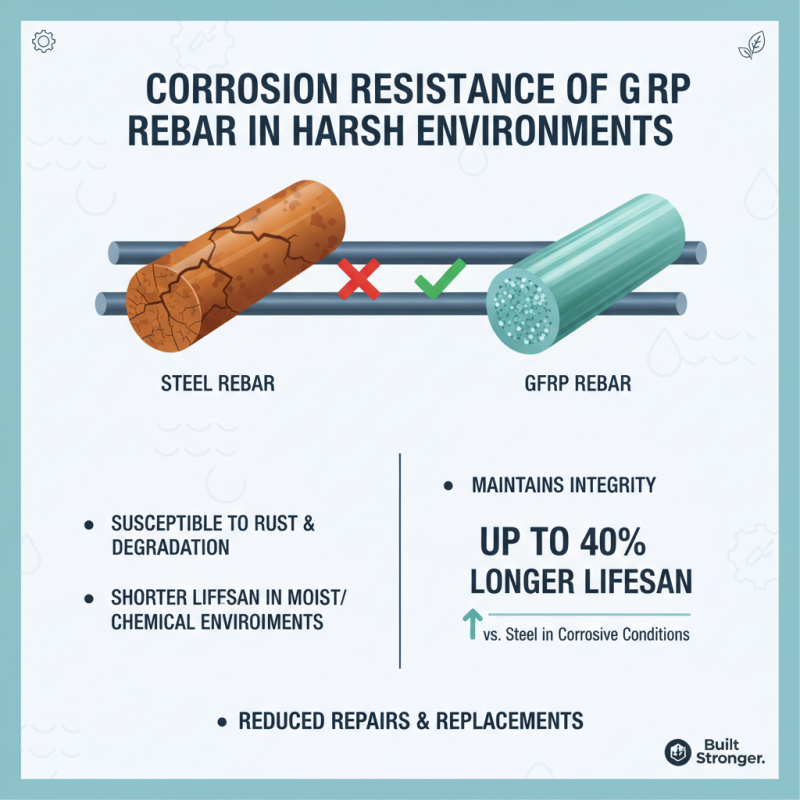
Corrosion Resistance of GFRP Rebar in Harsh Environments

Top 10 Benefits of Composite Gfrp Rebar in China?

Corrosion resistance is a critical advantage of GFRP (Glass Fiber Reinforced Polymer) rebar, especially in harsh environments. Traditional steel rebar often suffers from rust and degradation when exposed to moisture and chemicals. In contrast, GFRP maintains its integrity much longer. A study indicates that GFRP can outperform steel by up to 40% in terms of lifespan under corrosive conditions. This durability can significantly reduce the need for repairs and replacements.

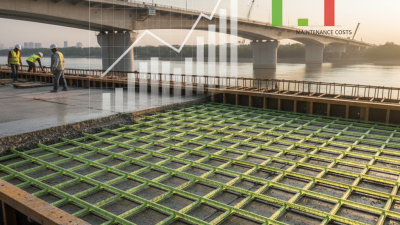
In coastal regions of China, where salt exposure is high, the benefits of GFRP are particularly evident. The material does not corrode like steel, ensuring that structures remain stable over time. According to the China Association of Construction Technology Consultants, projects utilizing GFRP rebar demonstrated a 30% reduction in overall maintenance costs compared to those using steel. This evidence underscores the economic value of adopting GFRP for construction in such environments.

Environmental factors pose a substantial threat to structural integrity. GFRP's lightweight nature also allows for easier handling and installation, delving into logistical efficiency. However, it is essential to consider the limitations of GFRP, such as its performance under high temperatures compared to traditional materials. Balancing these factors is vital for engineers and architects when choosing materials for construction projects.

Lightweight Nature and Its Impact on Construction Efficiency

The lightweight nature of composite GFRP rebar significantly enhances construction efficiency. This material is far lighter than traditional steel rebar, making it easier to handle on-site. Workers can quickly move and position these bars, reducing labor time and increasing overall productivity. Construction teams benefit from reduced fatigue, which can result in fewer injuries.

Moreover, using composite GFRP rebar can lead to less transportation cost and simpler logistics. Since it weighs less, fewer trucks are needed to transport the same amount of material. This lower requirement not only cuts costs but also minimizes the carbon footprint associated with transportation. These details showcase how lighter materials can impact project timelines and budgets.

However, there are considerations to address. Some may question the long-term durability of GFRP compared to steel. The industry continues to research and provide evidence to support composite materials’ reliability. As construction practices evolve, integrating lightweight solutions is a step toward future efficiency. But cautious evaluation remains essential. Balancing innovation with traditional methods is crucial for sustainable construction.

Top 10 Benefits of Composite Gfrp Rebar in China

Benefit Description Impact on Construction Efficiency
Lightweight Easier handling and installation due to lower weight. Reduces transportation costs and labor requirements.
Corrosion Resistance Does not rust or corrode like traditional steel rebar. Increases longevity of structures, reducing maintenance costs.
Non-Magnetic Ideal for applications in MRI facilities or sensitive environments. Enhances safety and operational integrity in sensitive areas.
High Strength-to-Weight Ratio Provides necessary load-bearing capacity with less material. Optimizes material use and structural design.
Increased Design Flexibility Can be molded into various shapes for diverse applications. Facilitates innovative architectural designs.
Thermal Insulation Low thermal conductivity helps reduce energy costs. Improves energy efficiency in buildings.
Sustainability Made from recyclable materials, promoting eco-friendliness. Supports green building initiatives.
Cost Effectiveness Long-term savings due to reduced maintenance and durability. Enhanced ROI on construction projects.
Rapid Construction Accelerated installation process due to lightweight nature. Shortens project timelines and improves efficiency.
Minimal Thermal Expansion Stable dimensions under varying temperature conditions. Ensures structural integrity over time.

Cost-Effectiveness of GFRP Rebar in Long-Term Applications

GFRP rebar presents significant cost-effectiveness for long-term construction applications in China. A recent industry report indicates that GFRP rebar can outperform traditional steel rebar by 30% over its lifespan when accounting for maintenance and replacement costs. This material is resistant to corrosion, reducing the frequency of costly repairs.

Moreover, the initial investment in GFRP may be higher, but the long-term benefits are often overlooked. For example, structures using GFRP rebar demonstrate lower lifecycle costs due to minimal deterioration. This can lead to savings that amount to millions over time for large-scale infrastructure projects.

However, it’s essential to note that the GFRP market is still evolving in China. Some contractors express concerns about the availability of experienced labor to install these materials. Additionally, the performance of GFRP may vary under extreme conditions. More comprehensive studies are needed to fully understand its performance in different environments. Balancing upfront costs against longevity can be challenging, yet the potential rewards make GFRP rebar worth considering for future projects.

Sustainability and Environmental Benefits of Using GFRP Rebar

The use of GFRP rebar in construction provides significant sustainability advantages. These materials have a lower carbon footprint compared to traditional steel rebar. The production process involves less energy, which leads to fewer greenhouse gas emissions. Additionally, GFRP rebar is lightweight, making transportation more efficient. This reduces fuel consumption during logistics.

Another aspect is longevity. GFRP rebar resists corrosion, which extends its lifespan. Structures that incorporate this material require less maintenance and repair. This not only saves costs but also minimizes waste over time. However, it’s important to consider the initial investment, which can be higher than traditional options. The industry is still adjusting to this shift, and some may find it daunting.

Moreover, the environmental impact goes beyond just the construction phase. When GFRP rebar is used, the overall structural integrity can lead to a reduced need for raw materials in the future. This creates a more sustainable cycle in the industry. Yet, awareness of these benefits needs to increase among engineers and builders for broader adoption, which remains a work in progress.

Top 10 Benefits of Composite GFRP Rebar in China

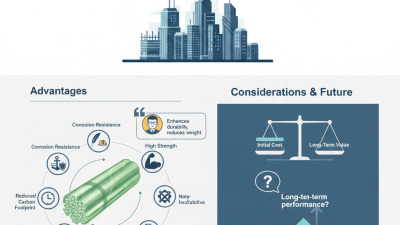
The chart below illustrates the various benefits of using GFRP rebar in construction projects across China. These benefits contribute to sustainability and environmental conservation, making GFRP a favorable choice for modern infrastructure.