2026 How to Choose High Property GFRP Rebar for Your Construction Needs?
Choosing the right materials for construction is crucial. High Property GFRP Rebar has gained significant attention. This innovative material offers great benefits over traditional steel rebar. It is lightweight and corrosion-resistant.
When considering High Property GFRP Rebar, think about your project requirements. You should assess load-bearing capacities and environmental factors. Not all GFRP rebars are created equal. The differences in quality can impact the overall performance of your structure.
Many construction professionals may overlook this aspect. While some focus solely on cost, durability should also be a priority. A poor choice can lead to future problems. Therefore, investing in quality is essential. Remember, the foundation of any project hinges on the materials used.
Understanding GFRP Rebar: Properties and Benefits for Construction
GFRP rebar, or Glass Fiber Reinforced Polymer rebar, has gained popularity in construction. It is lightweight yet strong, an appealing combination for builders. This material resists corrosion, making it ideal for harsh environments. The strength-to-weight ratio is impressive. It means less structural load and easier handling.
Despite the benefits, some challenges exist. GFRP rebar can be more expensive than traditional steel. Installation requires specific training and tools. Not all engineers are familiar with it, which can lead to confusion. Proper evaluation of project needs is crucial. Ensuring that your team understands how to work with GFRP is vital.
In terms of properties, GFRP is non-magnetic and electrically insulating. These characteristics make it useful in specialized applications, such as bridges and marine structures. However, its low thermal conductivity can lead to issues if not managed well. Understanding the nuances of GFRP rebar is essential before making a decision. Balancing cost, strength, and environmental factors will guide you in choosing the right material for your project.
Key Factors to Consider When Selecting GFRP Rebar for Projects
Selecting the right GFRP rebar for construction projects is crucial. Various factors influence this decision. A recent study indicates that GFRP rebar can outperform traditional steel in corrosive environments. It demonstrates higher durability and lower maintenance costs. But, not all GFRP rebar is created equal.
Strength-to-weight ratio is a key consideration. GFRP can be lighter yet provide similar or higher tensile strength compared to steel. This can reduce transportation and installation costs. However, some GFRP products may not meet the necessary strength standards. Construction teams should verify specifications carefully.
Environmental conditions also play a role. In harsh climates, UV resistance and temperature stability become essential. Recent reports show that GFRP has a longer lifespan in extreme environments. Yet, improper installation can lead to performance issues. Assessing local conditions and conducting thorough research will guide optimal choices. Proper training for handling and deploying GFRP rebar is essential to avoid potential pitfalls.
2026 How to Choose High Property GFRP Rebar for Your Construction Needs?
| Property |
Importance Level |
Recommendation |
| Tensile Strength |
High |
Select GFRP with tensile strength over 500 MPa. |
| Corrosion Resistance |
Very High |
Choose products with proven long-term durability against environmental factors. |
| Weight |
Medium |
Opt for lightweight options for easier handling and transport. |
| Cost |
High Importance |
Balance between cost and quality; avoid the cheapest options. |
| Installation Ease |
Medium |
Select designs that are user-friendly for quicker installation. |
| Thermal Properties |
Medium |
Assess thermal performance for specific project environments. |
Comparing GFRP Rebar with Traditional Steel Reinforcement Options
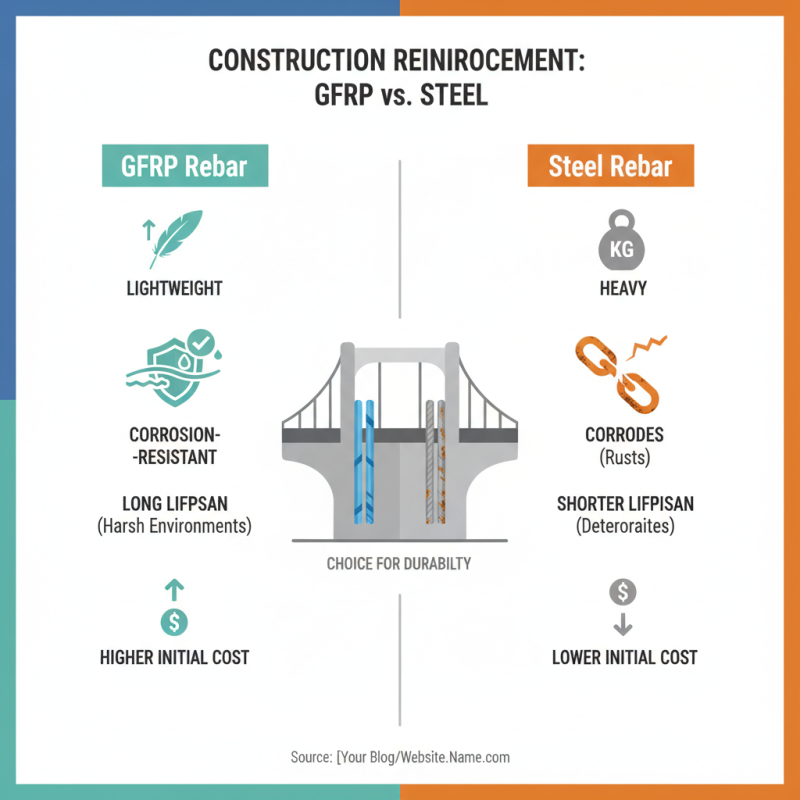
When choosing reinforcement for construction, GFRP rebar offers a unique alternative to traditional steel options. Glass Fiber Reinforced Polymer (GFRP) is lightweight and resistant to corrosion. This makes it a great choice for structures in harsh environments. Steel can rust and deteriorate over time. GFRP can last much longer, but it is essential to consider cost implications.
GFRP rebar is generally more expensive upfront. However, the reduced maintenance costs may offset this over time. Steel is still preferred in many projects due to its availability and familiarity among workers. It’s important to weigh the benefits and drawbacks of each option carefully. Not all projects suit GFRP. Its rigidity can sometimes be a limitation, impacting design flexibility.
Additionally, installation can require specialized skills. This could increase labor costs. It's crucial to assess project requirements and local conditions before deciding. GFRP can be less forgiving, and miscalculating needs or specifications could lead to complications later on. Each material has its strengths and weaknesses; understanding these is vital for successful construction.
Evaluating Cost-Effectiveness and Durability of GFRP Rebar
When considering GFRP (Glass Fiber Reinforced Polymer) rebar for construction, one must evaluate its cost-effectiveness and durability. GFRP rebar is known for its lightweight and corrosion-resistant properties. This makes it appealing for projects in harsh environments. However, the initial costs can be higher than traditional steel rebar.
For many constructions, the longevity of GFRP is a significant factor. It resists moisture and chemical damage, which can lead to less maintenance over time. Yet, some may question its strength under heavy loads. Testing is crucial here. Engineers need to verify that GFRP meets the specific load requirements of their projects.
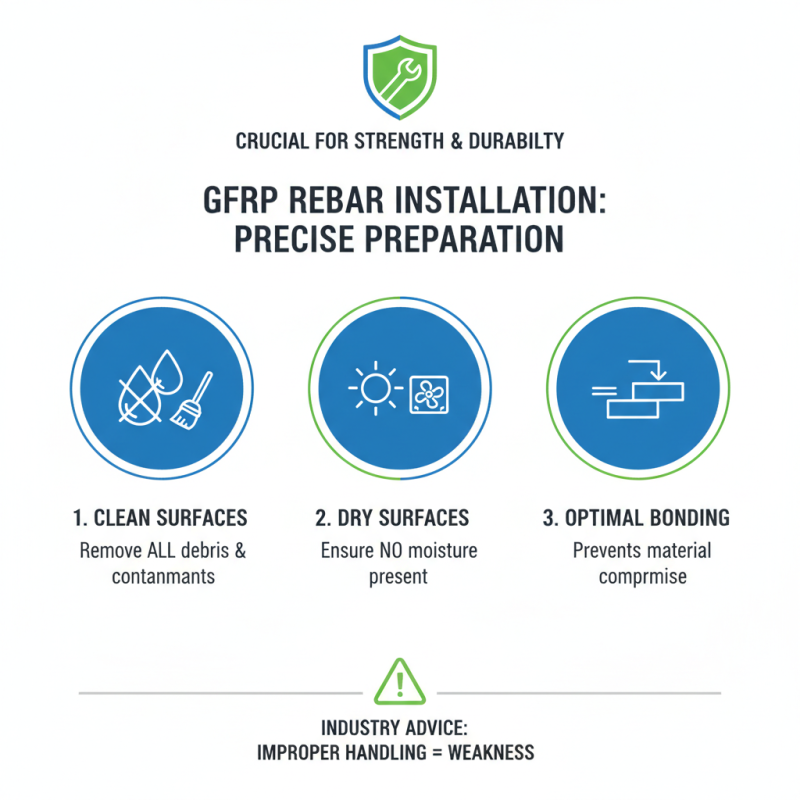
It is also important to consider installation challenges. GFRP requires different handling techniques compared to metal rebar. This could lead to increased labor costs. Additionally, the material's bonding with concrete could be less intuitive. This requires skilled labor to ensure proper installation and performance. Reflecting on these details can help make an informed choice for construction needs.
Cost-Effectiveness and Durability of GFRP Rebar vs. Traditional Rebar
This chart illustrates the cost-effectiveness and durability comparison of GFRP rebar and traditional steel rebar based on various factors including initial cost, lifespan, and resistance to corrosion.